30 Days in East Africa from Rwanda: The Ultimate Uganda, Kenya and Tanzania Safari
Introduction: Discover East Africa in 30 Days
A month in East Africa offers an exceptional opportunity to experience some of Africa’s most remarkable natural landscapes, wildlife destinations and cultural attractions. Starting in Rwanda, travellers can explore mountain gorillas in the Virunga region, discover Uganda’s tropical rainforests, experience Kenya’s legendary savannahs, explore Tanzania’s world-famous national parks and finish their adventure on the beautiful beaches of Zanzibar.
This 30-day East Africa itinerary is designed for adventurous travellers, couples, families and wildlife enthusiasts who want to experience several countries in one extended holiday. It combines gorilla trekking, chimpanzee tracking, traditional cultural experiences, Big Five wildlife safaris, scenic road trips and relaxing beach days.
Travellers can complete parts of the journey using a self-drive 4×4, a private safari vehicle with a professional driver-guide, domestic flights or a combination of these options. Those planning an independent adventure should arrange cross-border vehicle permissions and insurance before departure.
The journey begins in Kigali, Rwanda, and continues through Uganda and Kenya before reaching Tanzania’s northern safari circuit. The final days are spent enjoying the Indian Ocean coastline on Zanzibar Island.
Whether you prefer comfortable lodges, budget accommodation or camping with a rooftop tent, East Africa offers a wide range of ways to experience this extraordinary region.
Why Spend a Month Exploring East Africa?
East Africa is one of the world’s most rewarding destinations for wildlife tourism and adventure travel. Within a single month, visitors can experience several distinct ecosystems, from mist-covered mountain forests to open savannahs, crater lakes, volcanic landscapes and tropical beaches.
Rwanda offers mountain gorilla trekking, scenic countryside and cultural experiences. Uganda combines gorillas and chimpanzees with savannah wildlife and the mighty Nile region. Kenya is renowned for the Maasai Mara, the Great Rift Valley and its diverse wildlife. Tanzania offers the Serengeti, Ngorongoro Crater, Tarangire and Lake Manyara, while Zanzibar provides a relaxing coastal conclusion.
Travelling across these countries also offers opportunities to meet local communities, discover regional cuisines and learn about the different traditions and histories that shape East Africa.
For independent travellers, a self-drive safari in East Africa can provide greater flexibility, especially when exploring destinations outside the busiest tourist circuits.
Days 1–5: Explore Rwanda
Day 1: Arrive in Kigali
Begin your East African adventure in Kigali, Rwanda’s capital. After arriving at Kigali International Airport, transfer to your accommodation and take time to rest.
Depending on your arrival time, explore the city centre, visit local restaurants or browse craft markets. Kigali is a convenient starting point because it offers accommodation, vehicle rental arrangements, supermarkets and essential travel services.
If you are planning to drive across several countries, use your first day to check your vehicle documents, travel insurance, driving permits and border arrangements.
Day 2: Kigali City Tour
Spend the day discovering Kigali’s history and contemporary culture. Visit the Kigali Genocide Memorial to learn about the country’s history and its journey towards reconciliation.
Explore local markets, art galleries and neighbourhoods to experience everyday Rwandan life. You can also enjoy traditional Rwandan food before returning to your hotel.
Day 3: Kigali to Volcanoes National Park
Drive north towards Musanze, the gateway to Volcanoes National Park. The journey passes through Rwanda’s rolling green hills and rural communities.
Volcanoes National Park is famous for its endangered mountain gorillas and spectacular volcanic scenery. Spend the afternoon enjoying the landscape, visiting a cultural attraction or preparing for the following day’s trek.
Book gorilla permits well in advance, particularly during popular travel periods.
Day 4: Mountain Gorilla Trekking in Rwanda
Gorilla trekking is one of the highlights of a visit to Rwanda. Accompanied by authorised park guides and trackers, visitors hike through montane forest in search of a habituated mountain gorilla family.
The trek can involve steep slopes, muddy trails and changing weather conditions. Once the gorillas are located, visitors are allowed a regulated period to observe them while following the park’s conservation guidelines.
A gorilla encounter provides an unforgettable opportunity to observe these remarkable primates in their natural habitat.
For more information, link this section to your Rwanda gorilla trekking safari page, using the appropriate published destination URL.
Day 5: Lake Kivu
Travel towards Lake Kivu, one of Rwanda’s most beautiful lakes. Depending on your chosen route, you can visit Rubavu or another lakeside destination.
Enjoy the scenery, take a boat excursion or relax at a lakeside café. Lake Kivu offers a peaceful contrast to the physical demands of gorilla trekking.
Prepare for the journey into Uganda the following day.
Days 6–11: Uganda’s Gorillas, Chimpanzees and Wildlife
Day 6: Rwanda to Bwindi Impenetrable National Park
Cross into Uganda using an authorised border crossing and travel towards Bwindi Impenetrable National Park.
The exact driving time depends on your starting point, border crossing and accommodation location. Allow sufficient time for immigration procedures and road conditions.
Bwindi is a UNESCO World Heritage Site renowned for its rich biodiversity and mountain gorilla population. Arrange accommodation close to your allocated trekking sector to simplify the following day’s activities.
Day 7: Gorilla Trekking in Bwindi
Experience another mountain gorilla trek, this time in Uganda. The forest environment and trekking experience can differ from Rwanda, although both countries protect the same species of mountain gorilla.
An additional gorilla trek can be particularly rewarding for wildlife photographers and primate enthusiasts. Remember that permits are limited, require advance booking and must be arranged for the correct trekking location.
Travellers who prefer a less intensive itinerary can use this day for a forest walk or cultural activity instead.
Day 8: Bwindi to Queen Elizabeth National Park
Travel towards Queen Elizabeth National Park, one of Uganda’s best-known wildlife destinations.
The park contains savannah, wetlands, woodland and other habitats supporting elephants, buffaloes, antelopes, hippos and numerous bird species.
If time and road conditions permit, explore the Ishasha sector, which is known for occasional sightings of tree-climbing lions. Such sightings are never guaranteed.
Day 9: Queen Elizabeth National Park Safari
Enjoy a morning game drive to search for elephants, lions, buffaloes and other wildlife.
In the afternoon, consider a boat cruise on the Kazinga Channel. The waterway attracts hippos, crocodiles and a wide variety of birds, making it one of the region’s most rewarding wildlife-viewing experiences.
Return to your lodge for dinner and an overnight stay.
Day 10: Queen Elizabeth to Kibale Forest
Drive towards Kibale Forest National Park through the scenic countryside of western Uganda.
The region is known for crater lakes, green hills, farms and tropical forest. Depending on your interests, arrange a guided nature walk or visit a nearby community.
Kibale is among Uganda’s best-known destinations for chimpanzee tracking.
Day 11: Chimpanzee Trekking and Preparation for Kenya
Join an authorised chimpanzee-tracking excursion in Kibale Forest, subject to permit availability.
Observe the forest environment and learn about chimpanzee behaviour from trained guides. The experience differs from gorilla trekking because chimpanzees are highly mobile and sightings can involve considerable walking.
After the activity, begin travelling towards your next destination or spend an additional night on the way. Reaching Kenya by road from western Uganda requires careful route planning, and a comfortable overnight stop may be preferable to an excessively long drive.
For travellers seeking a less demanding trip, consider a regional flight or a revised itinerary.
Days 12–17: Kenya’s Great Rift Valley and Wildlife Safaris
Day 12: Enter Kenya
Cross into Kenya through an authorised border crossing and continue towards your planned overnight destination.
The most practical route depends on your location in Uganda, your preferred Kenyan parks and your vehicle arrangements. A direct road journey can be demanding, so confirm distances and realistic driving times before setting off.
Enjoy the changing landscapes as you move towards the Great Rift Valley region.
Day 13: Lake Nakuru National Park
Visit Lake Nakuru National Park, a conservation area known for its birdlife, scenic lake and important rhino habitat.
Depending on wildlife movements and conditions, visitors may encounter white or black rhinos, giraffes, buffaloes, zebras and other species.
The park’s viewpoints and varied habitats make it a worthwhile stop for wildlife photographers.
Day 14: Lake Nakuru to Maasai Mara
Travel to the Maasai Mara National Reserve, one of Africa’s most celebrated safari destinations.
The reserve’s expansive grasslands support lions, cheetahs, elephants, buffaloes, leopards and many other animals. It is also part of the wider ecosystem associated with the annual wildebeest migration.
Arrive at your accommodation, relax and prepare for the following two days of wildlife viewing.
Days 15–16: Explore the Maasai Mara
Spend two days exploring the Maasai Mara with game drives.
Early mornings and late afternoons can be productive periods for wildlife viewing. Depending on the season, you may see large herds of wildebeest and zebras, predators hunting or elephants moving across the plains.
The Great Migration follows seasonal rainfall and grazing conditions, so the location of the herds changes throughout the year.
Visitors can also arrange cultural visits with local Maasai communities through responsible operators.
For a self-drive visit, check reserve access rules, vehicle requirements, road conditions and accommodation logistics before entering.
Day 17: Maasai Mara to Nairobi
Return to Nairobi, Kenya’s capital. Depending on your departure time, you may have an opportunity to explore the city, enjoy local cuisine or visit a cultural attraction.
Use the evening to prepare for the journey into Tanzania.
Travellers should confirm vehicle authorisation and insurance for the Kenya–Tanzania border well before this stage of the trip.
Days 18–26: Discover Tanzania’s Northern Safari Circuit
Day 18: Nairobi to Arusha
Travel from Nairobi towards Arusha, entering Tanzania through the Namanga border crossing if it suits your itinerary and vehicle arrangements.
Allow time for immigration, customs and vehicle documentation. The crossing can take longer during busy periods.
Arusha is a major gateway to Tanzania’s northern safari circuit and a useful place to organise supplies, review park bookings and prepare for several days of wildlife viewing.
Day 19: Arusha to Tarangire National Park
Drive to Tarangire National Park, known for its large elephant populations, ancient baobab trees and seasonal wildlife concentrations.
The park’s river system attracts animals during dry periods, creating excellent opportunities for game viewing.
Spend the day exploring permitted roads and return to your booked accommodation or campsite.
Day 20: Tarangire Safari
Enjoy another day of wildlife viewing in Tarangire.
A second day gives you more time to explore different parts of the park, observe elephants and photograph the landscape without rushing.
After your game drive, continue towards the Lake Manyara or Karatu area, depending on your accommodation arrangements.
Day 21: Lake Manyara National Park
Explore Lake Manyara National Park, which offers a combination of groundwater forest, open areas and lake scenery.
Wildlife sightings vary, but the park is known for elephants, baboons, giraffes and birdlife. Tree-climbing lions are associated with the park, although sightings are not guaranteed.
After the safari, continue to Karatu, a convenient base for visiting Ngorongoro Conservation Area.
Day 22: Ngorongoro Crater Safari
Descend into Ngorongoro Crater for a memorable wildlife safari.
The crater’s varied habitats support a high concentration of animals, including zebras, wildebeest, buffaloes, lions and, with luck, endangered black rhinos.
Crater access, vehicle rules, conservation charges and permitted driving times should be confirmed before travel. The crater visit normally requires an early start.
Return to your accommodation in the Ngorongoro area or continue towards your planned overnight stop.
Day 23: Ngorongoro to Serengeti National Park
Travel towards Serengeti National Park, one of Africa’s most famous wildlife destinations.
The journey itself can provide excellent wildlife-viewing opportunities, depending on your route and current conditions. Choose accommodation in a location that matches your travel dates and the areas you want to explore.
Serengeti accommodation should be reserved early during popular seasons.
Days 24–25: Serengeti Wildlife Safari
Spend two full days exploring Serengeti National Park.
The park is celebrated for its extensive grasslands, predator populations and the annual movement of wildebeest and zebras across the wider ecosystem.
Your guide or route plan should take seasonal wildlife movements into account. The southern plains, central Serengeti and western or northern areas offer different experiences depending on the month.
For self-drive travellers, fuel planning, road conditions, park regulations and accommodation locations are particularly important because distances inside the ecosystem can be substantial.
Day 26: Serengeti to Arusha
Begin your return journey towards Arusha or another suitable departure point.
This can be a long day depending on where you stayed in the Serengeti and which exit route you use. An additional overnight stop may make the journey more comfortable.
If you intend to fly to Zanzibar, confirm the departure airport, flight schedule and rental vehicle return arrangements in advance.
Days 27–30: Zanzibar’s Beaches and Swahili Culture
Day 27: Fly to Zanzibar
Return your rental vehicle according to your booking agreement and take a suitable flight to Zanzibar.
After arrival, travel to Stone Town or your beach accommodation. Spend the afternoon discovering Zanzibar’s historic streets, traditional architecture and coastal atmosphere.
Zanzibar provides a relaxing contrast to the early starts and long drives of a month-long safari.
Day 28: Stone Town and Spice Experiences
Explore Stone Town, a historic centre shaped by African, Arab, Indian and European influences.
Visit local markets, admire carved wooden doors and discover the island’s Swahili heritage. You can also arrange a guided spice farm visit to learn about cloves and other crops associated with Zanzibar’s history.
Choose a responsible local guide and allow time to enjoy the island at a relaxed pace.
Day 29: Relax on Zanzibar’s Beaches
Spend the day on one of Zanzibar’s beautiful beaches.
Nungwi and Kendwa are popular for their northern coastal scenery, while Paje and Jambiani offer a different atmosphere along the southeast coast.
Depending on tides, weather and local conditions, activities may include swimming, snorkelling, dhow sailing or simply relaxing beside the Indian Ocean.
Day 30: Departure
Enjoy your final breakfast in Zanzibar before transferring to the airport.
Depending on your flight arrangements, you may depart internationally from Zanzibar or connect through another airport.
Your month-long East African journey ends with memories of mountain gorillas, chimpanzees, savannah wildlife, volcanic landscapes, local cultures and tropical beaches.
Estimated Cost of a 30-Day East Africa Safari
The cost of a month in East Africa depends on accommodation, group size, transportation, gorilla permits, park fees and the type of safari experience selected.
The following figures are indicative planning estimates in US dollars per person. They are not live quotations or guaranteed current fees.
| Expense category | Estimated cost per person |
|---|---|
| Accommodation for 29 nights | $1,000–$3,000 |
| Food and drinks | $450–$900 |
| Shared vehicle rental and fuel | $800–$1,800 |
| Park fees and game-drive expenses | $700–$1,800 |
| Rwanda gorilla trekking permit | Approximately $1,500 |
| Uganda gorilla trekking permit | Approximately $800 |
| Chimpanzee tracking and other activities | $100–$300 |
| Regional flight to Zanzibar | $100–$300 |
| Visas, insurance and miscellaneous expenses | $150–$450 |
Indicative total: approximately $5,600–$10,350 or more per person.
These figures require verification before publication or booking. In particular, gorilla permit prices, park charges, vehicle costs and flight fares can change. The estimate may exclude international flights, premium accommodation, private guides, some meals, vehicle cross-border charges and other optional activities.
For a more affordable trip, travellers can choose budget lodges, share transport costs, reduce the number of paid activities or choose one gorilla trekking destination instead of two.
Camping can reduce accommodation expenses, although appropriate camping equipment, campsite charges and vehicle suitability must be included in the budget.
Self-Drive Safari or Guided Tour?
Exploring East Africa by Self-Drive 4×4
A self-drive safari offers flexibility for travellers who enjoy independent road trips and want to determine their own daily schedules.
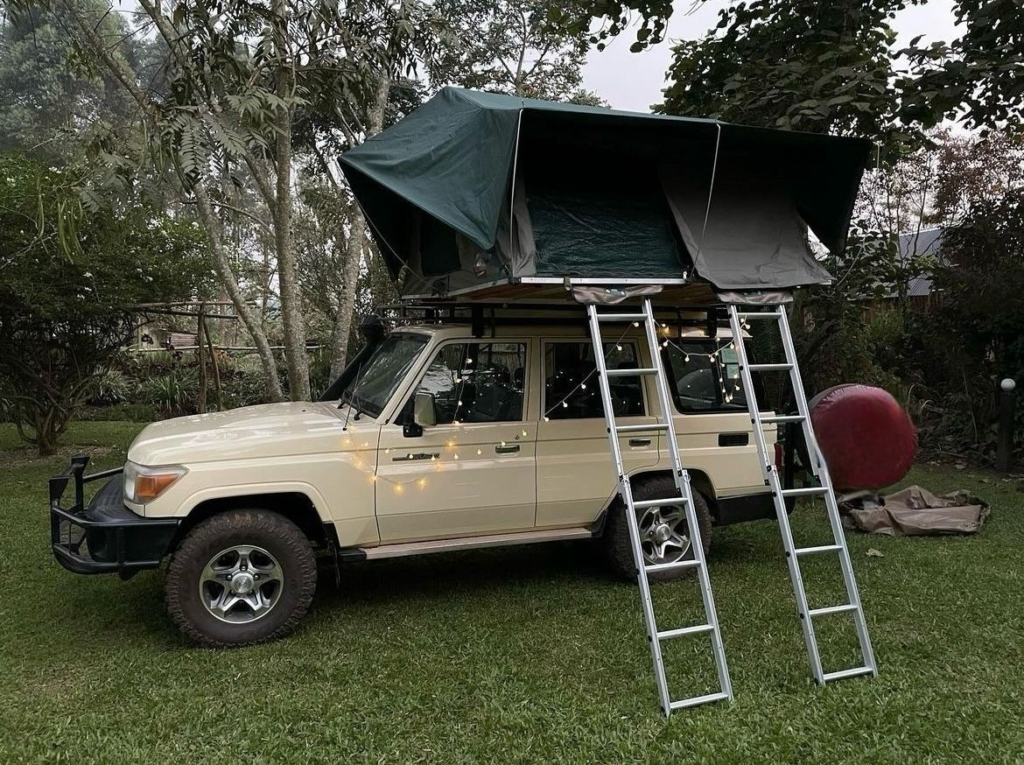
A suitable 4×4 can be useful for selected rural roads, safari areas and camping itineraries. Rooftop tents and camping equipment may also provide a practical accommodation option for travellers who prefer outdoor adventures.
However, a four-country trip requires careful planning. Confirm that your rental agreement permits travel in Rwanda, Uganda, Kenya and Tanzania. Check insurance coverage, border documentation, vehicle equipment requirements and park access rules.
Not every rental company allows cross-border travel, and some national parks require particular vehicle arrangements or restrict where self-drive visitors may go.
Explore our East Africa 4×4 car rental options to begin planning a suitable vehicle arrangement. Replace this example link with the exact relevant rental page if your website uses a different URL.
Exploring East Africa with a Driver-Guide
A guided safari is a convenient alternative for travellers who prefer not to manage long-distance driving, navigation and border procedures independently.
A professional guide can help with wildlife viewing, park logistics and local experiences. Depending on the operator, separate vehicles or transfers may be arranged for different countries.
A hybrid itinerary is another option: self-drive in one country, guided gorilla trekking and wildlife activities in another, followed by a domestic flight to Zanzibar.
Important Travel Requirements for a Multi-Country Safari
Before booking a 30-day East Africa itinerary, confirm the following:
- Passports and visas: Check entry requirements for every country based on your nationality and travel documents. The East Africa Tourist Visa covers eligible visits to Rwanda, Uganda and Kenya under its rules; it does not include Tanzania.
- Gorilla permits: Reserve permits for the correct country, park and trekking date.
- Vehicle documentation: Obtain written approval for cross-border travel, together with the required insurance and vehicle documents.
- Park fees: Verify current conservation fees, camping charges, crater access costs and other applicable permits.
- Road safety: Check road conditions, fuel availability, driving times and local driving requirements before setting off.
- Travel insurance: Choose coverage suitable for your activities, including trekking and any relevant medical evacuation needs.
- Flights and accommodation: Reserve high-demand safari lodges, camps and domestic flights early.
For independent travellers, allow flexibility in the schedule because border delays, weather and road conditions may affect travel times.
Frequently Asked Questions
Is 30 days enough to explore Rwanda, Uganda, Kenya and Tanzania?
Yes. Thirty days is enough for a highlights itinerary covering Rwanda’s gorillas, Uganda’s primates and wildlife, Kenya’s major safari destinations, Tanzania’s northern circuit and Zanzibar. However, the schedule is ambitious, and some travellers may prefer to focus on three countries for a more relaxed experience.
Can I drive from Rwanda to Tanzania through Uganda and Kenya?
Cross-border road travel is possible in principle, but it depends on the rental company’s permissions, insurance, vehicle documents and the entry rules at each border. Obtain written approval before booking. A vehicle rented in Rwanda should not be assumed to be permitted in all three other countries.
Can I do gorilla trekking in both Rwanda and Uganda?
Yes, provided you obtain separate permits for each country’s gorilla trekking programme. The two experiences offer opportunities to see mountain gorillas in different protected areas, but permits are limited and should be booked early.
What is the best time of year for this East Africa itinerary?
The most suitable period depends on your priorities. Drier months can be favourable for many wildlife activities and trekking, but conditions vary by location. The Great Migration also changes location throughout the year, and gorilla trekking takes place year-round, including during wetter periods.
Choose your dates based on the combination of wildlife, weather, accommodation availability and budget.
How much does a month in East Africa cost?
A budget-to-midrange itinerary may cost approximately $5,600–$10,350 or more per person based on the indicative estimates above. The final price depends on gorilla permits, safari fees, accommodation, transport, flights and group size.
Can I complete this itinerary with a rooftop tent?
Camping with a rooftop tent may be possible for selected sections, provided your rental company offers suitable equipment and authorises the planned cross-border route. You must also arrange permitted campsites and follow the rules of each national park.
Some destinations are easier to explore with lodge accommodation, a local transfer or a guided activity rather than relying entirely on self-drive camping.
Is Zanzibar included in a mainland safari?
Zanzibar is included in this proposed itinerary as a four-day beach extension. Most travellers will need to arrange a flight from mainland Tanzania and confirm how and where their rental vehicle will be returned.
Do I need a visa for every country?
Entry requirements depend on your nationality and travel documents. Eligible visitors may use the East Africa Tourist Visa for Rwanda, Uganda and Kenya, subject to its conditions. Tanzania has separate immigration requirements, so check the official guidance before travelling.
Plan Your 30-Day East Africa Adventure
A month in East Africa is an opportunity to experience four destinations with distinct landscapes, wildlife and cultural traditions. From Rwanda’s volcanic forests to Uganda’s chimpanzee habitats, Kenya’s open savannahs, Tanzania’s remarkable wildlife parks and Zanzibar’s tropical beaches, this journey offers an extraordinary combination of adventure and relaxation.
The most successful itineraries balance ambitious travel goals with realistic driving times, confirmed permits and comfortable overnight stops.
Whether you want an independent road trip, a rooftop-tent camping adventure or a guided safari with lodge accommodation, planning the route in advance will help you make the most of every day.
Start planning your East African journey today. Contact us to discuss vehicle availability, accommodation, gorilla permits, park fees and a personalised itinerary based on your travel dates and budget.
Explore our East Africa self-drive safari options and begin planning your journey from Rwanda through Uganda, Kenya and Tanzania to Zanzibar.