A Guide to Akagera National Park, Rwanda
Akagera National Park is Rwanda’s only savannah park and one of the country’s premier destinations for classic African wildlife safaris. Located in Rwanda’s north-eastern corner along the Tanzanian border, the park covers approximately 1,122 square kilometres of rolling hills, open savannah, papyrus wetlands, floodplains, woodlands and a chain of beautiful lakes fed by the Akagera River.
While Rwanda is internationally famous for mountain gorilla trekking in Volcanoes National Park, Akagera offers a completely different experience. Here, travellers can enjoy traditional African game viewing, with opportunities to see lions, rhinos, elephants, giraffes, buffalo, hippos, crocodiles, monkeys and many other species.
What makes Akagera particularly special is its remarkable conservation story. Following the 1994 genocide against the Tutsi, large numbers of displaced people settled in and around the park. Wildlife populations suffered heavily from poaching and habitat loss, while parts of the park were converted to farmland and cattle pasture.
By the early 2000s, Akagera had been reduced to approximately one-third of its original size, and lions had disappeared completely. Since 2010, however, a partnership between the Rwanda Development Board and African Parks has transformed the park through stronger conservation management, anti-poaching measures, wildlife monitoring and the reintroduction of key species.
Lions were reintroduced in 2015, while eastern black rhinos were reintroduced in 2017 and again in 2019. Southern white rhinos were also introduced separately. These conservation efforts have helped restore Akagera as a genuine Big Five safari destination.
Today, Akagera represents more than a wildlife destination. Its recovery demonstrates how conservation, tourism, effective park management and community participation can work together to restore a protected area.
Location and Geography of Akagera National Park
Akagera National Park lies in Rwanda’s Eastern Province along the border with Tanzania. Its proximity to Kigali makes it one of the most accessible wildlife safari destinations in East Africa.
The park is approximately 110 kilometres from Kigali, and the southern entrance can generally be reached within two to three hours by road under favourable conditions. The exact journey time depends on traffic, road conditions and the location of your accommodation.
Unlike Rwanda’s mountainous western and northern regions, Akagera has a predominantly lowland savannah landscape. Its ecosystems include:
- Open savannah plains
- Rolling hills
- Acacia and woodland areas
- Papyrus wetlands
- Swamps
- Rivers
- Forest-fringed lakes
- Floodplains
Water is one of the defining features of Akagera. Approximately one-third of the park is covered by water bodies, creating a diverse combination of terrestrial and aquatic habitats.
The Akagera River gives the park its name and feeds a network of lakes and wetlands. Lake Ihema is among the most famous, particularly for boat safaris where visitors can observe hippos, crocodiles and large concentrations of waterbirds.
The combination of open grasslands, wetlands, lakes and woodland helps explain why Akagera supports such a wide variety of wildlife.
Getting to Akagera National Park
Akagera is approximately two to two and a half hours by road from Kigali, making it an easy addition to a Rwanda travel itinerary.
The journey from Kigali passes through Rwanda’s characteristic terraced hills and small trading centres before gradually changing into the flatter and drier landscapes surrounding the national park.
Most visitors reach Akagera by private vehicle, rental car, organised safari transfer or tour vehicle. A paved road connects Kigali with the southern entrance near Kayonza.
Self-Driving to Akagera
Self-driving is possible and increasingly attractive to travellers who prefer flexibility and independence. The park has an established network of driving tracks through savannah, woodland and lakeside habitats.
A 4×4 vehicle with good ground clearance is strongly recommended, particularly during the rainy seasons when some interior roads can become muddy and challenging for ordinary vehicles.
Travellers without their own vehicle can also arrange day trips and multi-day safari packages through tour operators in Kigali. These commonly include transportation, guides and assistance with park arrangements.
A small number of visitors arrive by chartered light aircraft, with aircraft able to land at an airstrip within the park.
Best Time to Visit Akagera National Park
Akagera National Park can be visited throughout the year, although each season offers a somewhat different safari experience.
June to September – Long Dry Season
The long dry season, approximately from June to September, is generally considered one of the best periods for wildlife viewing.
As vegetation becomes thinner, animals are easier to spot and often concentrate around remaining water sources. The roads are also generally firmer and more reliable.
This is a popular travel period, so accommodation and campsites can fill quickly. Advance booking is recommended.
December to February – Short Dry Period
The shorter dry period from December to February can also provide excellent wildlife-viewing conditions.
There are generally good opportunities for game drives, while visitor numbers may be lighter than during parts of the main dry season.
March to May and October to November – Rainy Seasons
The rainy seasons bring a very different atmosphere to Akagera. The landscape becomes lush and green, skies can be dramatic, and the conditions are excellent for photography and birdwatching.
Migratory birds arrive during parts of the wet season, while resident species can also be particularly active.
The main disadvantages are muddy roads, thicker vegetation and a greater possibility of rain interrupting activities. For photographers and birdwatchers, however, these conditions can be highly rewarding.
Ultimately, the best time to visit Akagera depends on your priorities, budget and interests.
Wildlife in Akagera National Park
The Big Five
Akagera is Rwanda’s savannah destination for travellers hoping to see the African Big Five: lion, leopard, elephant, buffalo and rhinoceros.
Lions
Lions had disappeared from Akagera by the early 1990s but were reintroduced from South Africa in 2015.
The population has subsequently grown, with several dozen lions now distributed among different prides. Their return has been one of the most important milestones in Akagera’s conservation history.
Rhinoceros
Eastern black rhinos, a critically endangered subspecies, were reintroduced to Akagera in 2017, followed by another translocation in 2019.
Southern white rhinos were also introduced separately.
Rhino sightings can be particularly rewarding, although the exact locations of rhinos are kept discreet for security and conservation reasons.
Elephants, Buffalo and Leopards
African elephants and buffalo are among the other major mammals found throughout the park.
Leopards are also present but are elusive and much more difficult to encounter. Seeing one requires patience, good timing and sometimes a little luck.
Other Wildlife
Beyond the Big Five, Akagera supports a remarkable variety of mammals, including:
- Giraffes
- Plains zebras
- Defassa waterbuck
- Topi
- Roan antelope
- Oribi
- Eland
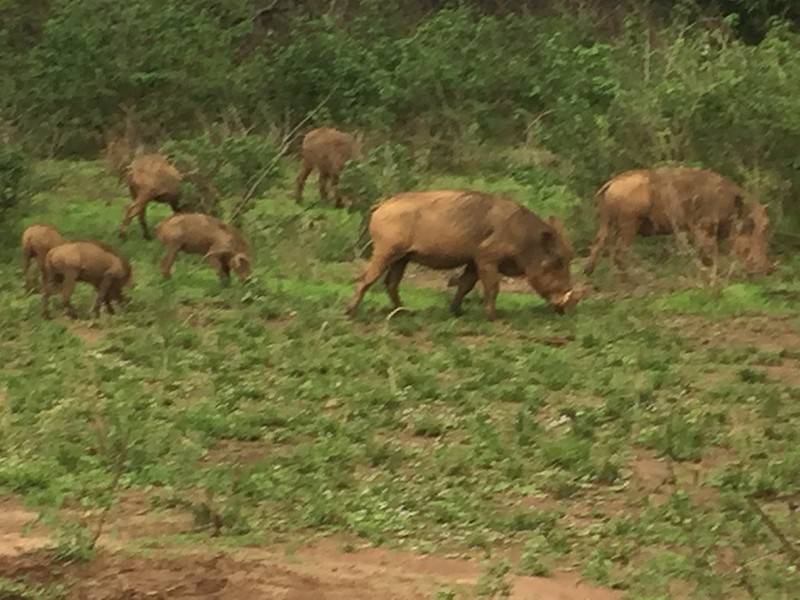
- Warthogs
- Duikers
- Reedbuck
- Bushbuck
- Hyenas
- Striped jackals
- Impala
- Olive baboons
- Several monkey species
The park’s lakes and rivers support large populations of hippopotamus and Nile crocodiles. Lake Ihema is particularly rewarding for viewing these aquatic animals during a boat cruise.
Birdwatching in Akagera
Birdwatching is another major attraction in Akagera National Park, with more than 500 recorded bird species.
The park’s combination of wetlands, papyrus swamps, savannah and woodland provides habitat for an impressive variety of birds.
One of the most sought-after species is the prehistoric-looking shoebill stork. Other notable birds include:
- African fish eagle
- Papyrus gonolek
- Grey-crowned crane
- Red-faced barbet
- White-winged swamp warbler
- Papyrus canary
- Lilac-breasted roller
- Black-headed gonolek
- Double-toothed barbet
- Meyer’s parrot
- Swamp flycatcher
Birdwatching can be incorporated into game drives, boat cruises and guided nature walks. Early morning is particularly productive because birds are generally more active during the cooler hours.
Things to Do in Akagera National Park
Akagera offers a wide variety of activities, making it suitable for wildlife enthusiasts, photographers, families, birdwatchers and adventure travellers.
Game Drives
Game drives are the classic Akagera experience.
Visitors can explore a network of dirt tracks through savannah, woodland, wetlands and lakeside habitats either independently or with an experienced guide.
According to the supplied park schedule, the main game-drive periods include:
Morning Game Drive: 6:30 AM–11:30 AM
This is an excellent period for wildlife viewing because temperatures are cooler and many animals are active.
Afternoon Game Drive: 12:00 PM–5:00 PM
The afternoon drive provides another opportunity to explore the park, with animal activity often increasing again as temperatures begin to fall.
Night Game Drive: 5:30 PM–approximately 8:30 PM
Night drives are mainly conducted in the southern sector and provide opportunities to search for nocturnal wildlife using spotlight torches. These drives must be conducted under the guidance and leadership of park guides and rangers.
Early morning and late afternoon are generally productive periods for wildlife viewing.
Boat Safari on Lake Ihema
A boat safari offers a more relaxed way to explore Akagera.
Lake Ihema is particularly popular for boat excursions, bringing visitors close to hippos, crocodiles and concentrations of waterbirds.
Scheduled boat safaris are offered in several departures:
- 7:30 AM–8:30 AM
- 9:00 AM–10:00 AM
- 3:00 PM–4:00 PM
- Sunset Cruise: 4:30 PM–6:00 PM
Private boat trips can also be arranged for travellers seeking a more personalised experience.
The sunset cruise is especially appealing for photographers and travellers looking for a relaxing experience on the water while watching the landscape change in the evening light.
Birdwatching
With more than 500 recorded bird species, Akagera is an excellent destination for bird lovers.
Birding can be undertaken during game drives, boat trips and guided nature walks. Wetlands, lakes, swamps, savannah and forest patches all provide different birding opportunities.
Guided Nature Walks
Guided nature walks provide an opportunity to experience Akagera at a slower pace.
Walking allows visitors to pay closer attention to smaller wildlife, plants, tracks, insects and birdlife that can easily be overlooked from a safari vehicle.
Sport Fishing
Sport fishing is mainly conducted on Lake Shakani.
Species such as tilapia and catfish are targeted, with conservation practices encouraging the release of younger fish.
Visitors should bring their own fishing equipment.
Hot-Air Balloon Safaris
Hot-air balloon safaris provide an exclusive perspective over Akagera’s savannah, lakes and wildlife.
The experience takes place around sunrise and offers sweeping aerial views of the park while the landscape is illuminated by the early morning light.
Behind-the-Scenes Conservation Experiences
Some visitors can arrange conservation-focused experiences that provide insight into Akagera’s restoration.
These experiences may introduce travellers to aspects of anti-poaching, wildlife management and conservation monitoring, helping visitors understand how the park was transformed from a heavily degraded protected area into an important wildlife destination.
Akagera National Park Entrance Fees and Costs
Akagera National Park entrance fees are set by the Rwanda Development Board in partnership with African Parks. Rates vary depending on nationality, residency, age and length of stay.
According to the 2026 tariff information included in the source material, the one-day/night entry fee is:
- International visitors: USD 100
- Foreign residents of Rwanda/EAC: USD 50
- Rwandan/EAC citizens: RWF 15,000
Different rates apply to children and other categories.
Children under six years are generally admitted free, while children between six and twelve generally receive approximately a 50% discount.
For visitors staying inside the park, entrance fees are charged per night rather than simply per day. The fee is reduced by half on the second and third nights and becomes free from the fourth night onward for stays of up to one week.
Visitors staying outside the park may be charged differently depending on the location of their accommodation and frequency of entry.
Other activities, including boat cruises, night drives, guided game drives and fishing permits, are charged separately. Vehicle entry fees may also apply, with different rates for Rwandan-registered and foreign-registered vehicles.
Because park fees and regulations can change, travellers should confirm the latest tariff directly with Akagera management or the Rwanda Development Board before travelling.
Where to Stay in Akagera National Park
Accommodation in and around Akagera ranges from public campsites and basic camping to comfortable lodges and luxury tented camps.
Ruzizi Tented Lodge
Located on the shores of Lake Ihema, Ruzizi Tented Lodge offers comfortable tented accommodation, solar power and full-board services.
Its lakeside setting provides convenient access to boat excursions and makes it a popular base for exploring the southern sector of Akagera.
Magashi Camp
Magashi Camp is an upmarket property in the northern sector near Lake Rwanyakazinga.
The surrounding area is known for strong wildlife-viewing opportunities, including lions and wetland species such as sitatunga.
Salt of Akagera
Formerly known as Akagera Game Lodge, Salt of Akagera sits on a hillside overlooking Lake Ihema.
The property offers comfortable accommodation, a swimming pool and broad views of the surrounding landscape.
Karenge Bush Camp
Karenge Bush Camp is a smaller and more rustic tented camp in the northern sector overlooking the Kilala plains.
It is well suited to travellers looking for a simple bush experience and a closer connection with the natural environment.
Akagera Campsites
Akagera also offers public campsites for budget travellers and visitors who prefer sleeping closer to nature.
The main public campsites include:
- Muyumbu
- Mihindi
- Shakani
- Mutumba
Accommodation outside the park is another option, particularly for travellers looking for lower-cost lodging.
Practical Tips for Visiting Akagera National Park
Choose a Suitable Vehicle
A 4×4 vehicle with reasonable ground clearance is strongly recommended, particularly during the rainy season.
Pack for Safari Conditions
Useful items include:
- Lightweight, neutral-coloured clothing
- Hat
- Sunscreen
- Insect repellent
- Binoculars
- Camera
- Comfortable walking shoes
- Reusable drinking water
Carry Multiple Payment Options
Payment methods can vary between accommodation providers and activities. Carrying some cash as a backup is advisable even when travelling with cards.
Respect Wildlife
Always maintain a safe distance from wildlife and follow instructions from guides and park authorities.
Some sensitive wildlife locations, particularly rhino sightings, may not be publicly disclosed for security reasons.
Drive carefully and remember that animals have priority within the park. Visitors must never intentionally approach, harass or harm wildlife.
Book Ahead During Peak Periods
June to September and December to February are among the busier travel periods.
Accommodation and popular activities such as boat cruises can become fully booked, so advance reservations are recommended.
Combining Akagera With Other Rwanda Experiences
One of the advantages of visiting Akagera is that it can easily form part of a wider Rwanda itinerary.
Travellers interested in wildlife can combine Akagera with Volcanoes National Park, where mountain gorilla trekking provides a completely different experience in Rwanda’s volcanic highlands.
Another option is Nyungwe Forest National Park, where visitors can experience chimpanzee tracking, forest wildlife and canopy walks.
Combining these destinations allows travellers to experience several sides of Rwanda within one journey: savannah wildlife in Akagera, volcanic landscapes and gorillas in the north, and ancient rainforest in the south.
Frequently Asked Questions About Akagera National Park
Is Akagera National Park worth visiting?
Yes. Akagera provides Rwanda’s classic savannah safari experience and is particularly attractive to travellers who want to see large mammals, birds, wetlands and landscapes that are very different from Rwanda’s mountain and rainforest destinations.
Can you see the Big Five in Akagera?
Akagera has populations of lion, leopard, elephant, buffalo and rhinoceros, making it Rwanda’s principal Big Five safari destination.
How far is Akagera from Kigali?
Akagera is approximately 110 kilometres from Kigali, and the southern entrance can generally be reached in around two to three hours by road, depending on conditions and the starting point.
Can you self-drive in Akagera?
Yes. Self-driving is possible within Akagera, although a suitable 4×4 vehicle is strongly recommended, especially during rainy periods.
What is the best time to visit Akagera?
June to September is generally favourable for classic wildlife viewing because vegetation is thinner and roads are usually firmer. December to February can also offer good conditions, while the rainy seasons are particularly attractive for photography and birdwatching.
What animals can you see in Akagera?
Visitors may see lions, rhinos, elephants, buffalo, leopards, giraffes, zebras, hippos, crocodiles, antelopes, warthogs, hyenas, monkeys and many other species.
Is Akagera suitable for birdwatching?
Yes. More than 500 bird species have been recorded in the park, including the highly sought-after shoebill stork.
Can Akagera be combined with gorilla trekking?
Absolutely. Akagera can be combined with Volcanoes National Park for a varied Rwanda safari that includes both savannah wildlife and mountain gorilla trekking.
Plan Your Akagera Safari
Akagera National Park offers an impressive combination of wildlife, wetlands, lakes, savannah landscapes and conservation history. Whether you are interested in the Big Five, birdwatching, boat safaris, photography, self-driving or simply experiencing a different side of Rwanda, Akagera deserves a place on your itinerary.
For travellers planning a self-drive adventure, a suitable 4×4 vehicle provides the freedom to explore the park and connect Akagera with other destinations across Rwanda and East Africa.
Plan your Rwanda safari with experienced local specialists and combine Akagera with gorilla trekking, chimpanzee tracking, cultural experiences or a wider East African road trip for a more complete African adventure.