Great Rift Valley Self-Drive Safari from Rwanda: Explore East Africa by 4×4
Introduction: Discover the Great Rift Valley from Rwanda
A Great Rift Valley self-drive safari from Rwanda is an exciting way to explore East Africa’s dramatic landscapes, freshwater lakes, volcanic mountains, wildlife reserves and traditional communities. Starting in Kigali, travellers can drive through Rwanda’s green highlands and extend their road trip into Uganda, Kenya or Tanzania, discovering the extraordinary diversity of the East African Rift System.
The journey can combine the beautiful shores of Lake Kivu, the volcanic scenery of the Virunga Mountains, Uganda’s western Rift Valley lakes, Kenya’s famous escarpments and wildlife destinations, or Tanzania’s vast safari landscapes. Travelling by 4×4 gives you the flexibility to choose your destinations, spend extra time at scenic viewpoints and create an itinerary that suits your interests.
Whether you prefer comfortable lodge accommodation, camping with a rooftop tent or a combination of both, a self-drive safari in East Africa offers an independent way to experience the Great Rift Valley.
What Is the Great Rift Valley?
The Great Rift Valley is an extensive geological system formed by tectonic forces that have shaped eastern Africa over millions of years. Its landscapes include steep escarpments, volcanic mountains, deep freshwater lakes, alkaline lakes, fertile valleys and important wildlife habitats.
The western branch of the East African Rift System passes through the Lake Albert region and continues south through Lake Edward, Lake Kivu, Lake Tanganyika and Lake Rukwa. The eastern branch includes parts of Kenya and Tanzania, where dramatic escarpments, volcanic formations and Rift Valley lakes create outstanding scenery.
Rwanda is particularly well placed for exploring the western branch and neighbouring destinations. Travellers can begin with Lake Kivu and then continue into Uganda or Tanzania, while Kenya is an excellent extension for those planning a longer East African adventure.
Best Great Rift Valley Self-Drive Destinations from Rwanda
1. Lake Kivu, Rwanda
Lake Kivu is one of Rwanda’s most attractive destinations for a scenic road trip. Surrounded by terraced hills, green mountains and small lakeside communities, it provides a relaxing introduction to the Great Rift Valley.
A drive from Kigali towards Rubavu, Karongi or Rusizi reveals beautiful countryside and changing views of the lake. Visitors can enjoy lakeside accommodation, boat excursions, local markets and opportunities to experience life in Rwanda’s western region.
The Lake Kivu circuit is ideal for travellers who want to begin with a shorter holiday using a 4×4 car rental in Rwanda before extending their journey across international borders.
2. Volcanoes National Park and the Virunga Mountains
Although the Virunga Mountains are best known for mountain gorillas, their volcanic scenery also makes them an important stop on a broader Great Rift Valley journey.
From Kigali, drive north towards Musanze and Volcanoes National Park. The landscape features forested volcanoes, cultivated hillsides and cool mountain surroundings.
Activities include gorilla trekking with a valid permit, golden monkey tracking and cultural experiences around the park. Travellers can then return to Kigali or continue towards Uganda for additional Rift Valley scenery and wildlife destinations.
3. Uganda’s Western Rift Valley and Crater Lakes
Uganda offers some of the most rewarding extensions to a Great Rift Valley road trip from Rwanda. The western part of the country combines volcanic crater lakes, forested hills, wildlife reserves and spectacular views of the Rift Valley escarpment.
A suggested route is:
Kigali → Katuna border → Kabale → Lake Bunyonyi → Queen Elizabeth National Park → Fort Portal.
Lake Bunyonyi is known for its steep green hills and numerous islands. Further north, Queen Elizabeth National Park offers savannah wildlife, crater lakes and boat trips along the Kazinga Channel. Fort Portal provides access to the region’s volcanic crater lakes and Kibale Forest, which is famous for chimpanzee tracking.
This route is particularly attractive for travellers who want to combine landscapes, wildlife and primate experiences in one Rwanda to Uganda self-drive safari.
4. Lake Albert and the Albertine Rift
For a longer Uganda adventure, travellers can explore the Albertine Rift around Lake Albert and the western escarpment.
The wider region contains important habitats for birds, primates and other wildlife. Depending on the itinerary, the journey can include Murchison Falls National Park, where the Nile passes through a narrow gorge, before continuing towards western Uganda.
This extension is better suited to travellers with additional time because driving distances, park activities and accommodation stops need careful planning.
5. Kenya’s Great Rift Valley
Kenya is one of the most rewarding countries for travellers interested in the eastern branch of the Great Rift Valley. Its landscapes include dramatic escarpments, freshwater lakes, alkaline lakes, volcanic formations and internationally recognised wildlife reserves.
For a Rwanda-origin itinerary, the most practical option is generally to travel through Uganda and arrange an onward journey to Kenya, subject to the chosen vehicle and border arrangements. A suitable East Africa 4×4 car rental can help travellers plan a multi-country road trip, provided the rental company authorises the intended border crossings.
Important destinations include:
Lake Naivasha: A freshwater lake known for hippos, birdlife and boat excursions. Visitors can also explore nearby walking areas and enjoy views of the Rift Valley landscape.
Lake Nakuru National Park: A protected area known for rhinos, diverse birdlife and other wildlife. Its lake and surrounding escarpments make it a popular stop on a self-drive safari in Kenya.
Lake Elementaita: A scenic Rift Valley lake recognised for its birdlife and peaceful surroundings.
Maasai Mara National Reserve: Although farther from the main Rift Valley lakes, the reserve is an excellent addition for travellers who want to combine scenic road trips with classic African wildlife viewing and, seasonally, the Great Migration.
Hell’s Gate National Park: An attractive destination near Lake Naivasha, known for its dramatic rock formations, cliffs and opportunities for guided walking and cycling activities in permitted areas.
6. Tanzania’s Rift Valley and Northern Safari Circuit
Tanzania is another excellent extension for a Great Rift Valley self-drive adventure from Rwanda. Depending on the selected route, travellers can explore Lake Victoria, the northern safari circuit and the landscapes surrounding the Ngorongoro highlands.
A possible itinerary is:
Kigali → Rusumo border → western Tanzania → Lake Victoria region → northern Tanzania.
Travellers with more time may continue towards Serengeti National Park, Ngorongoro Conservation Area, Lake Manyara National Park and Tarangire National Park.
These destinations are especially suitable for wildlife enthusiasts who want to combine a cross-border road trip with game drives, savannah scenery and the opportunity to experience Tanzania’s famous safari ecosystems. Explore a self-drive safari in Tanzania to learn more about vehicle options and planning a wildlife-focused road trip.
The route should be planned carefully because road conditions, driving distances and the most suitable crossing points depend on the final destination.
Suggested 14-Day Great Rift Valley Self-Drive Itinerary from Rwanda
This sample itinerary focuses on Rwanda and Uganda, offering a manageable introduction to the western Rift Valley. Travellers who want to include Kenya or Tanzania should allow additional days.
Day 1: Arrive in Kigali
Arrive in Rwanda’s capital, collect your rental vehicle and review the planned route. Spend the day exploring Kigali, visiting local markets or enjoying the city’s restaurants before starting the road trip.
Overnight: Kigali.
Day 2: Kigali to Lake Kivu
Drive west through Rwanda’s green hills to Lake Kivu. Spend the afternoon enjoying the lakeside scenery, relaxing at your accommodation or arranging a boat excursion.
Overnight: Rubavu or Karongi, depending on your preferred route.
Day 3: Explore Lake Kivu
Enjoy a relaxed day by the lake. Explore nearby communities, enjoy the views and prepare for the next stage of your journey.
Overnight: Lake Kivu.
Day 4: Lake Kivu to Volcanoes National Park
Travel north towards Musanze and the Virunga Mountains. Depending on your schedule, visit local attractions or prepare for a gorilla trekking excursion.
Overnight: Musanze or Kinigi.
Day 5: Volcanoes National Park
Enjoy a pre-booked gorilla trek or another permitted park activity. Gorilla trekking requires an appropriate permit and advance planning.
Overnight: Musanze.
Day 6: Rwanda to Lake Bunyonyi, Uganda
Drive towards the Uganda border and continue to Lake Bunyonyi after completing the necessary immigration and vehicle formalities. Enjoy the scenery around the lake.
Overnight: Lake Bunyonyi.
Day 7: Lake Bunyonyi
Spend the day exploring the lake, enjoying the surrounding hills and relaxing before continuing north.
Overnight: Lake Bunyonyi.
Day 8: Lake Bunyonyi to Queen Elizabeth National Park
Travel north towards Queen Elizabeth National Park. Allow time for the drive and any necessary stops along the way.
Overnight: Near Queen Elizabeth National Park.
Day 9: Queen Elizabeth National Park
Enjoy a wildlife drive in designated park areas. Depending on availability and your schedule, consider a boat excursion along the Kazinga Channel.
Overnight: Queen Elizabeth National Park area.
Day 10: Explore the Crater Lakes
Discover the crater lake landscapes around western Uganda. Enjoy scenic viewpoints and local communities while following suitable roads for your vehicle.
Overnight: Fort Portal or the surrounding area.
Day 11: Kibale Forest
Explore the Fort Portal region or arrange a chimpanzee-tracking activity in Kibale Forest with the required booking and permit.
Overnight: Fort Portal or Kibale area.
Day 12: Return towards Rwanda
Begin your return journey, choosing an overnight stop based on driving time and road conditions. Avoid attempting to complete a long cross-border drive when fatigue or border delays could make it impractical.
Overnight: Western Uganda or another suitable stop.
Day 13: Return to Kigali
Complete the journey back to Kigali, allowing sufficient time for the border crossing and vehicle return arrangements.
Overnight: Kigali.
Day 14: Departure
Return your rental vehicle and depart from Kigali, or extend your stay with additional activities.
Planning note: This is a flexible outline, not a fixed-distance itinerary. The Lake Kivu and Volcanoes National Park sections can require backtracking depending on the selected route. A final itinerary should be mapped around the chosen border crossing, accommodation and activities.
Choosing the Right 4×4 for a Great Rift Valley Self-Drive
Choosing a suitable vehicle is important for a comfortable and safe cross-border road trip.
Toyota Land Cruiser Prado
A Toyota Land Cruiser Prado is a good option for couples, families and small groups who want comfort, luggage space and capable four-wheel drive for a mixture of paved highways and rougher roads.
Toyota Land Cruiser 70 Series
The Land Cruiser 70 Series is worth considering for more demanding overland routes, remote destinations and travellers carrying camping equipment. Its suitability depends on the specific model, passenger requirements and road conditions.
Toyota Hilux with Rooftop Tent
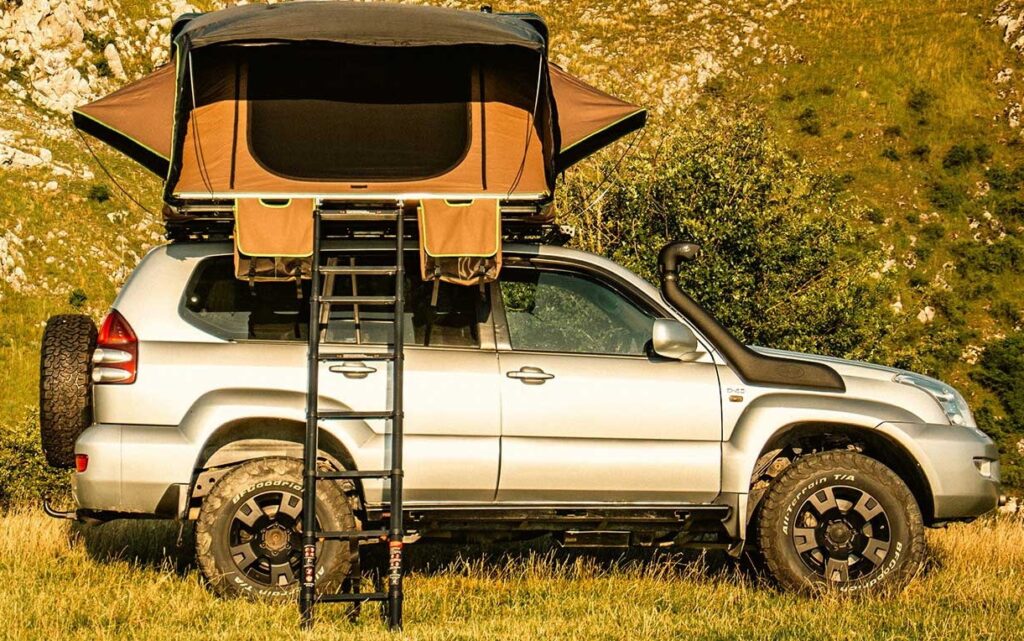
A Toyota Hilux equipped with a 4×4 rental with rooftop tent can suit travellers who prefer camping and want the flexibility to stay at campsites along the way. Confirm the number of seats, tent capacity and included camping equipment before booking.
4×4 with Full Camping Equipment
For a more independent adventure, choose a vehicle equipped with a rooftop tent or ground tent, mattress, sleeping bags, fridge, cooking equipment, table and chairs. Check whether the rental includes recovery equipment, spare tyres and cross-border support.
Cross-Border Car Rental from Rwanda
A Great Rift Valley self-drive journey may cross Rwanda’s borders into Uganda, Kenya or Tanzania. Not every rental vehicle is automatically authorised for travel across all these countries.
Before booking, confirm:
- Written permission to take the vehicle into each intended country.
- Required vehicle registration and temporary import documentation.
- Valid motor insurance for every country on the itinerary.
- Border procedures and any applicable fees.
- Breakdown assistance and recovery arrangements.
- One-way rental availability and vehicle return conditions.
- National park access rules and restrictions on driving after dark.
If the rental company does not authorise cross-border travel, an alternative is to rent a vehicle in each country or arrange a flight or transfer between separate self-drive sections.
Best Time for a Great Rift Valley Self-Drive Safari
The best time depends on your priorities and the destinations included.
June to September: Often a popular period for wildlife-focused travel, although conditions differ across countries and parks.
December to February: Can be attractive for a combination of sightseeing, wildlife activities and road trips, depending on local rainfall.
March to May: Many areas experience heavier rainfall, which can make some unpaved roads more challenging.
October to November: Shorter rains affect some destinations, while others remain suitable for travel.
Because the Rift Valley extends across different climates and elevations, check the seasonal conditions for each park rather than assuming that one period is ideal for the entire route.
Great Rift Valley Self-Drive Safari: Frequently Asked Questions
Can I start a Great Rift Valley self-drive safari in Kigali?
Yes. Kigali is a practical starting point for a Rwanda road trip and a wider East African adventure. You can explore Lake Kivu and the Virunga region before continuing into Uganda or arranging an onward journey to Tanzania or Kenya.
Can I drive from Rwanda to Kenya?
Yes, an overland journey is possible through Uganda. However, vehicle authorisation, border requirements and the overall driving time must be confirmed before departure.
Can I combine Rwanda, Uganda and Tanzania?
Yes. A multi-country trip can combine Rwanda’s volcanic scenery, Uganda’s Rift Valley lakes and wildlife, and Tanzania’s safari destinations. Allow enough time for long drives, border procedures and park visits.
Is a 4×4 necessary?
A 4×4 is recommended for itineraries that include rough access roads, remote campsites or certain national park tracks. A standard vehicle may be suitable for some paved-road sections, but the right choice depends on the exact route and season.
Can I camp during the journey?
Yes, where permitted campsites are available. A rooftop-tent vehicle or a 4×4 with a ground tent can provide flexibility, but you should confirm campsite availability, equipment inclusions and park camping regulations.
How many days do I need?
A week can cover selected Rwanda destinations or a short Rwanda–Uganda route. Ten to fourteen days is more suitable for a varied Rwanda and western Uganda journey. Including Kenya or Tanzania generally requires additional time to avoid spending too much of the holiday driving.
Plan Your Great Rift Valley Self-Drive Adventure
The Great Rift Valley offers an exceptional opportunity to discover East Africa through independent travel. From Lake Kivu and the Virunga Mountains to Uganda’s crater lakes, Kenya’s Rift Valley and Tanzania’s wildlife destinations, a carefully planned road trip can combine spectacular scenery with cultural encounters and memorable safari experiences.
For a successful journey, choose a reliable 4×4, plan realistic daily driving distances and confirm all cross-border and national park requirements before departure.
Planning a Great Rift Valley self-drive safari from Rwanda? Choose a suitable 4×4 rental, decide whether you prefer rooftop-tent camping or lodge accommodation, and build your itinerary around the destinations you most want to explore.