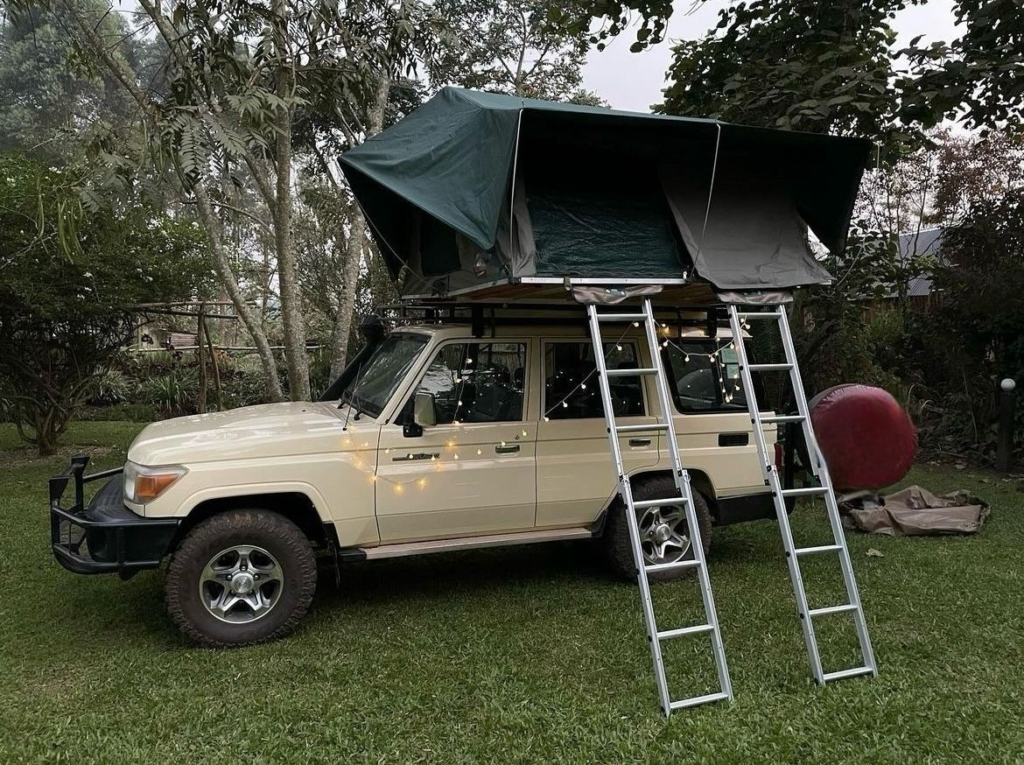
East Africa Camping Safari from Rwanda: Explore Rwanda, Uganda, Kenya and Tanzania by 4×4
Introduction: Start Your East African Adventure in Rwanda
An East Africa camping safari from Rwanda is an exciting way to explore the region at your own pace. Starting in Kigali, travellers can discover Rwanda’s beautiful landscapes, continue into Uganda for mountain gorilla trekking and wildlife safaris, and extend their adventure to Kenya and Tanzania for classic African wildlife experiences.
A camping safari offers freedom, flexibility and an opportunity to experience East Africa beyond conventional hotels and organised tours. With a suitable 4×4 vehicle, a rooftop tent or ground tent, and essential camping equipment, you can enjoy scenic drives, designated campsites, national parks and local communities along the way.
Whether you are planning a one-week Rwanda and Uganda adventure or a three- to four-week East African road trip, choosing the right vehicle and route is essential.
Through self-drive car rental in Rwanda, you can plan an independent adventure with the flexibility to choose your destinations, overnight stops and daily activities.
Why Start Your Camping Safari in Rwanda?
Rwanda is an excellent starting point for an East African road trip. Kigali offers an international airport, accommodation options, restaurants, supermarkets and access to the country’s main road network.
Before heading into the countryside, you can explore Kigali, visit the Kigali Genocide Memorial, discover local markets and prepare your camping supplies.
From the capital, you can travel towards Lake Kivu, Nyungwe Forest National Park and Volcanoes National Park. You can then continue into neighbouring Uganda, subject to the vehicle’s cross-border permissions and the necessary travel documents.
Rwanda is particularly attractive for travellers who want to combine scenic landscapes, cultural experiences and primate encounters in one trip.
Recommended East Africa Camping Safari Itinerary from Rwanda
A three-week itinerary provides a good starting point for combining Rwanda, Uganda and Kenya, with Tanzania as an optional extension. Distances, border formalities and road conditions should be considered when setting the final schedule.
Days 1–3: Kigali and Lake Kivu, Rwanda
Begin your journey in Kigali, where you can collect your rental vehicle, check the camping equipment and purchase food, water and other supplies.
Spend time exploring the capital before driving towards Lake Kivu. The lakeside towns of Rubavu and Karongi offer beautiful scenery, relaxing waterfront experiences and opportunities to enjoy Rwanda’s countryside.
Stay at a campsite or other accommodation that confirms it can host overnight visitors. Use these first days to become familiar with your vehicle and establish a comfortable driving routine.
Days 4–6: Nyungwe Forest and Southern Rwanda
Continue towards Nyungwe Forest National Park, an important destination for forest scenery, hiking and primate experiences.
You can arrange guided forest activities, including chimpanzee tracking, subject to availability and the park’s requirements. Overnight in a designated campsite or an established lodge.
Allow sufficient time for mountain roads and changing weather conditions. Nyungwe is a destination to enjoy gradually rather than rush through.
Days 7–10: Volcanoes National Park and Musanze
Drive towards Musanze in northern Rwanda, the gateway to Volcanoes National Park.
This area is famous for mountain gorilla trekking, golden monkey tracking and views of the Virunga volcanoes. Gorilla trekking requires a separate permit and advance planning.
Spend a few nights in the region to allow time for your booked activities and to enjoy the surrounding countryside.
Important: Camping close to a national park does not automatically grant permission to camp inside it. Confirm campsite locations, entry arrangements and overnight rules before arrival.
Days 11–15: Uganda Wildlife and Gorilla Country
Continue into Uganda through an approved border crossing, provided your rental company has authorized the vehicle to enter Uganda.
Depending on your interests, you could explore southwestern Uganda, including the areas around Kisoro, Mgahinga Gorilla National Park and Bwindi Impenetrable National Park.
Uganda offers opportunities for gorilla trekking, forest walks, birdwatching and scenic countryside drives. A longer itinerary could also include Queen Elizabeth National Park for savannah wildlife.
Plan your overnight stays at designated campsites or established accommodation. If gorilla trekking is a priority, book permits for the correct park and date before finalising your route.
Days 16–18: Queen Elizabeth National Park or Lake Bunyonyi
Choose between a wildlife-focused experience and a more relaxed lakeside stay.
Queen Elizabeth National Park offers opportunities to see elephants, buffaloes, antelopes and a variety of bird species. Wildlife sightings are never guaranteed, and park rules determine where you may drive and stop.
Alternatively, spend more time around Lake Bunyonyi, known for its scenic hills and islands. It is a rewarding place to slow down after several days on the road.
For a short trip, this is a good point to return to Rwanda. For a longer adventure, continue towards Kenya.
Days 19–21: Extend the Journey to Kenya
Travellers with additional time can extend their trip to Kenya, potentially visiting destinations around Nairobi or planning a longer safari towards the Maasai Mara.
However, reaching Kenya from Uganda involves substantial driving and border formalities. Three days is generally too short to explore multiple Kenyan safari destinations properly after travelling from Rwanda.
For a more rewarding experience, allow at least another five to seven days for Kenya, depending on your chosen route and activities.
If your priority is the Maasai Mara, confirm the permitted route, vehicle arrangements, campsite locations and park access before leaving Uganda.
Optional Extension: Tanzania
Tanzania can be added to a longer East African camping adventure, particularly for travellers interested in the Serengeti, Ngorongoro Conservation Area, Tarangire National Park or the southern safari circuit.
However, Tanzania is not automatically covered by the East Africa Tourist Visa, and cross-border vehicle arrangements must be confirmed separately.
Allow additional time for driving, border procedures, park fees and campsite bookings. A combined Rwanda–Uganda–Kenya–Tanzania expedition is best planned as a longer itinerary rather than squeezed into three weeks.
Choosing the Best 4×4 for an East Africa Camping Safari
The vehicle you choose can make a major difference to your comfort, safety and flexibility.
For a multi-country camping trip, look for a dependable vehicle suited to your planned roads, luggage and camping equipment.
Toyota Land Cruiser with Rooftop Tent
A suitable Toyota Land Cruiser can be a good option for travellers planning extended camping trips, remote destinations and selected rough-road routes.
Depending on the model and configuration, it may offer useful ground clearance, space for camping equipment and capability for demanding conditions.
Explore Toyota Land Cruiser rental in Rwanda if your itinerary includes remote safari areas or extensive off-road-style travel on permitted routes.
Toyota RAV4 or Similar 4×4
A Toyota RAV4 or similar vehicle may suit couples or small groups following a route dominated by paved roads and well-maintained gravel roads.
Before choosing a compact SUV, check its ground clearance, drivetrain, luggage capacity and suitability for your camping equipment. Not every RAV4 is a full-time 4×4, and not every model is suitable for every safari road.
See our 4×4 car rental in Rwanda options to compare vehicles for your planned journey.
Land Cruiser 70 Series
For travellers seeking a more rugged camping vehicle, selected Land Cruiser 70 Series models may offer a practical platform for extended overland journeys.
Suitability depends on the exact model, seating configuration, luggage requirements and equipment provided.
Ask about 4×4 rental with rooftop tent options, including the tent, mattress, bedding, fridge, cooking equipment and recovery gear included in the rental.
Essential Camping Equipment
A successful camping safari requires more than a suitable vehicle. Before departing Kigali, confirm exactly what equipment your rental package includes.
Your checklist should include:
- Rooftop tent or ground tent, depending on the vehicle and your preference
- Mattress, sleeping bags, pillows and bedding
- Camping table and chairs
- Cooking stove, gas supply and basic kitchen utensils
- Cooler or camping fridge, where available
- Water containers and drinking water
- Headlamps, torches and spare batteries
- First-aid kit and personal medication
- Vehicle recovery equipment appropriate to the route
- Spare tyre, jack and wheel-changing tools
- Offline maps, phone charging equipment and power banks
- Rubbish bags and basic cleaning supplies
Carry enough food and water for remote stretches, while restocking in towns whenever possible. Keep food securely stored and follow campsite rules for wildlife safety.
Cross-Border Requirements for a Rwanda Camping Safari
Driving a rental vehicle across several countries requires advance preparation. A rental agreement that permits driving in Rwanda does not necessarily permit entry into Uganda, Kenya or Tanzania.
Before booking, confirm the following with your rental company:
- Written permission for every country on your itinerary
- Vehicle registration documents and the rental agreement
- Cross-border insurance and any required regional insurance certificate
- Customs documentation and temporary vehicle-entry permits
- Approved border crossings and any applicable vehicle fees
- Whether the vehicle is allowed into your intended national parks
- One-way drop-off availability and additional fees, if returning in another country
You should also check passport validity, entry permissions, visa requirements and driving licence rules for your nationality.
The East African Community provides guidance on regional travel documents and road travel, but requirements differ between private vehicles, rental vehicles and individual travellers.
Best Time for an East Africa Camping Safari
The best time depends on the activities and countries you plan to visit.
June to September: Often a popular period for wildlife viewing and outdoor travel in many East African destinations. Campsites and popular trekking permits can be in high demand.
December to February: Can be suitable for a variety of wildlife and road-trip itineraries, although local conditions vary.
March to May: Wetter conditions affect many destinations. Some roads may become muddy or difficult, and extra flexibility is advisable.
October to November: Short rains occur in parts of the region, although rainfall patterns vary. This can still be a rewarding period for travellers prepared for changing conditions.
For gorilla trekking, wildlife safaris and camping, check conditions for each specific park rather than relying on a single regional weather pattern.
How Much Does an East Africa Camping Safari Cost?
The total cost depends on the length of the trip, vehicle category, camping equipment, number of travellers and destinations visited.
| Expense | What to budget for |
|---|---|
| 4×4 rental | Daily rental rate multiplied by the rental period |
| Camping equipment | Included in some packages; otherwise charged separately |
| Fuel | Depends on distance, vehicle and route |
| Campsites | Rates vary by location and facilities |
| National park fees | Depend on the park, visitor category and vehicle |
| Gorilla trekking | Separate permit fees where applicable |
| Food and supplies | Groceries, drinking water and meals |
| Cross-border expenses | Insurance, permits, administration and vehicle fees where applicable |
| Flights and accommodation | Optional, depending on your itinerary |
Request an itemised quote before booking. Make sure it distinguishes the vehicle rental price from fuel, camping equipment, park entry, permits and cross-border charges.
Practical Tips for Camping Across East Africa
Plan realistic driving days. Long distances, border queues, roadworks, weather and wildlife activities can make a route take longer than expected.
Avoid driving at night where possible, especially on unfamiliar rural roads. Refuel in major towns before heading into remote areas and carry offline navigation maps.
Use authorised campsites and follow each park’s regulations. Do not drive off designated roads, approach wildlife too closely or leave food exposed at campsites.
Finally, keep your travel documents, rental paperwork, insurance details and emergency contacts accessible throughout the trip.
Book Your East Africa Camping Safari from Rwanda
An East Africa camping safari from Rwanda combines independent travel, spectacular landscapes, wildlife experiences and the freedom to explore at your own pace. With a suitable 4×4, well-planned overnight stops and the correct cross-border permissions, you can create a memorable journey through Rwanda and its neighbouring countries.
Whether you want a compact SUV for a scenic road trip or a fully equipped 4×4 with a rooftop tent for an extended safari, choosing the right vehicle is the first step.
Contact our team to discuss your route, travel dates, camping equipment requirements and preferred drop-off location.
Start planning your adventure with our Rwanda self-drive car rental service and explore our East Africa 4×4 camping safari options.
Frequently Asked Questions
Can I start an East Africa camping safari in Rwanda?
Yes. Kigali is a practical starting point for a Rwanda road trip, with the possibility of extending into neighbouring countries if your vehicle rental agreement and travel documents permit it.
Can I drive a rental car from Rwanda into Uganda?
Potentially, yes, but the rental company must approve the crossing and arrange the necessary documents and insurance. Confirm the exact vehicle and border arrangements before paying a deposit.
Can I visit Rwanda, Uganda, Kenya and Tanzania on one camping safari?
Yes, an itinerary covering all four countries can be planned, but it requires careful coordination of visas, vehicle permissions, insurance, park access and return arrangements. Tanzania has separate visa arrangements from the East Africa Tourist Visa covering eligible travel to Rwanda, Uganda and Kenya.
Is a rooftop tent necessary for a Rwanda camping safari?
No. A rooftop tent is convenient for travellers who prefer camping, but you can also use a ground tent or combine campsites with lodges and guesthouses.
What is the best vehicle for a multi-country camping safari?
A suitable 4×4 is generally the more versatile option for an extended safari, especially when your route includes rough roads and remote destinations. The best model depends on the terrain, group size, luggage and equipment.
How many days do I need for an East Africa camping safari from Rwanda?
Seven to ten days can work well for a Rwanda-focused trip or a compact Rwanda–Uganda itinerary. Around two to three weeks allows more time for Uganda, while three to four weeks or longer is more practical if you want to add Kenya and Tanzania.
Can I return the rental vehicle in a different country?
This depends on the rental provider and its partner network. One-way international rentals may incur additional fees or may not be available. Confirm your preferred collection and return locations before booking.