Nyungwe National Park, Rwanda: Complete Guide to Wildlife, Chimpanzee Tracking, Canopy Walks and Hiking
Introduction to Nyungwe National Park, Rwanda
Rising across the mist-covered hills of south-western Rwanda, Nyungwe National Park protects one of Africa’s oldest and best-preserved montane rainforests. Mist drifts between towering trees, streams tumble through deep green valleys, and the forest echoes with the calls of birds and monkeys. For travellers seeking more than a traditional wildlife safari, Nyungwe offers something extraordinary: the opportunity to explore an ancient ecosystem filled with remarkable biodiversity, breathtaking scenery and unforgettable outdoor adventures.
The park is home to chimpanzees, thirteen recorded primate species, hundreds of bird species and an impressive variety of plants, including numerous orchids. It is also one of Rwanda’s most important water catchment areas, supplying rivers that contribute to both the Congo and Nile drainage systems.
In 2023, Nyungwe National Park was inscribed on the UNESCO World Heritage List, recognising its exceptional biodiversity and global conservation importance.
Whether you are interested in tracking chimpanzees, walking high above the forest canopy, hiking through lush rainforest or discovering Rwanda’s tea-growing communities, Nyungwe deserves a place on your itinerary.
This comprehensive guide explains where Nyungwe National Park is located, its history and climate, the wildlife you can encounter, the best activities, how to get there, the best time to visit and where to stay. It also includes practical advice for travellers planning a Rwanda self-drive safari or a wider East African adventure.
Location of Nyungwe National Park
Nyungwe National Park lies in south-western Rwanda, extending across a mountainous landscape in the country’s Southern and Western provinces. Its southern boundary approaches Burundi, where the forest forms part of a wider ecological landscape connected to Burundi’s Kibira National Park. To the west, the terrain descends towards Lake Kivu, the Rusizi River valley and the border with the Democratic Republic of the Congo.
Covering approximately 1,019 square kilometres, Nyungwe is one of the largest protected montane rainforest areas in Africa. Its extensive forest, high elevations and diverse habitats make it one of the continent’s most important centres for biodiversity.
Several locations provide access to different activities and sections of the forest. Uwinka is the principal visitor centre and an important starting point for guided walks and forest excursions. The Gisakura area, on the western side of the park, is popular with visitors staying near the tea plantations. Kitabi provides another useful access area for travellers approaching from the direction of Huye.
When planning your visit, confirm the departure point for each activity with your tour operator or park authorities. Different activities may operate from different locations, and driving times between them can be significant.
History of Nyungwe National Park
Nyungwe’s natural history stretches back thousands of years. Its forests have survived major climatic changes and provide a refuge for numerous plant and animal species. Communities living around the forest have long depended on its natural resources, including water, medicinal plants and honey, while maintaining cultural connections with the surrounding landscape.
Formal protection began in 1933, when the area was established as a forest reserve under the colonial administration. Early management focused largely on protecting the forest’s resources and watershed functions, although human pressures and changes in surrounding land use continued to pose challenges.
In 2004, Nyungwe was designated a national park, strengthening its protection and supporting the development of nature-based tourism. Conservation initiatives have since included anti-poaching patrols, ecological research, habitat protection and community projects designed to encourage sustainable use of the surrounding landscape.
The forest’s inscription on the UNESCO World Heritage List in 2023 marked another important milestone. Today, Nyungwe plays a central role in Rwanda’s conservation efforts, supporting wildlife, protecting water resources and creating opportunities for local communities through responsible tourism.
Climate and Weather in Nyungwe National Park
Nyungwe experiences a cool, humid mountain climate influenced by its high elevation and abundant rainfall. Temperatures are generally mild compared with Rwanda’s warmer lowland areas, often ranging from approximately 10°C to 19°C, although conditions vary with altitude, season and time of day.
Rainfall is substantial throughout the year, averaging around 2,000 millimetres annually in many descriptions of the forest’s climate. Rain can occur even during the drier months, and early-morning mist is common.
Rwanda generally experiences two rainy seasons and two comparatively dry periods:
- Long rainy season: March to May.
- Shorter dry season: December to February.
- Short rainy season: September to November.
- Longer dry season: June to September.
These are broad seasonal patterns rather than guarantees of dry weather. Rainfall can vary considerably, so visitors should be prepared for changing conditions at any time of year.
During the wetter months, the forest becomes especially lush, streams flow strongly and the scenery is spectacular. However, trails may become slippery and muddy, making some hikes more physically demanding.
The drier months are often preferred for hiking, canopy walks and chimpanzee tracking because trails may be easier to navigate. Nevertheless, chimpanzees and other primates can be encountered throughout the year, and experienced guides can help visitors make the most of changing forest conditions.
Pack waterproof clothing, sturdy hiking boots, warm layers and a waterproof cover for your camera or other electronic equipment.
Geography and Landscape
Nyungwe National Park is characterised by steep mountain ridges, deep valleys, dense montane rainforest, bamboo patches, wetlands and flowing streams. The landscape forms part of the Albertine Rift, a region known for its remarkable concentration of endemic plants and animals.
Elevations range from approximately 1,600 metres in some lower areas to nearly 3,000 metres at the highest ridges. Mount Bigugu, reaching approximately 2,950 metres, is the park’s highest point.
The forest occupies an important position along the watershed separating drainage systems flowing towards the Congo Basin and the Nile Basin. Numerous streams originate in or are fed by the forest, making Nyungwe essential to Rwanda’s water security and the health of downstream ecosystems.
The Rukarara River system is associated with the upper reaches of the Nile drainage network and is often discussed in connection with the river’s distant sources.
Beyond its ecological significance, Nyungwe offers striking scenery. Rolling tea plantations surround parts of the forest, particularly near Gisakura and Kitabi, creating a beautiful contrast between cultivated green hills and untouched rainforest.
The combination of altitude, rainfall and varied habitats supports exceptional biodiversity and makes Nyungwe one of the most important montane forest conservation areas in Africa.
Wildlife and Biodiversity in Nyungwe National Park
Nyungwe is particularly famous for its primates, forest birds and plant diversity. Unlike Rwanda’s savannah parks, where open landscapes provide opportunities to spot large mammals, Nyungwe rewards visitors who enjoy exploring a dense forest environment with the help of experienced guides.
Primates of Nyungwe National Park
Nyungwe is one of Africa’s outstanding primate destinations, with thirteen recorded primate species.
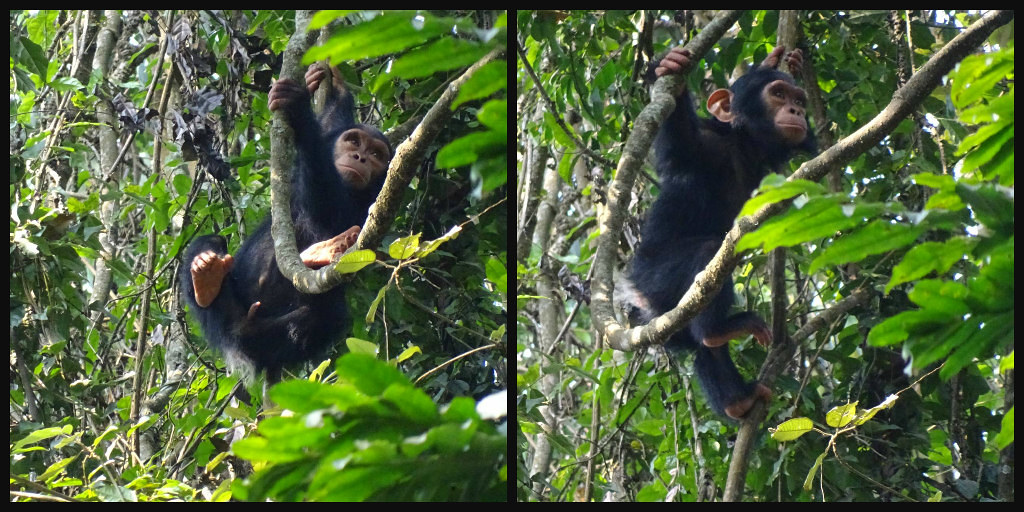
Chimpanzees are the park’s principal wildlife attraction. The forest supports an estimated population of around 500 chimpanzees, although the likelihood of seeing them depends on their movements, the location of the habituated groups and prevailing forest conditions.
Another highlight is the Angola black-and-white colobus monkey. These striking primates have long black-and-white coats and often gather in large groups, providing memorable wildlife-viewing and photography opportunities.
Other primates recorded in the forest include:
- L’Hoest’s monkeys.
- Blue monkeys.
- Silver monkeys.
- Grey-cheeked mangabeys.
- Olive baboons.
- Vervet monkeys.
- Other forest-dwelling monkeys and nocturnal primates, including bushbabies.
Seeing different species depends on the location, time of day and activity you choose. Chimpanzee tracking and guided forest walks offer some of the best opportunities to observe primates in their natural habitat.
Birdwatching in Nyungwe National Park
Nyungwe is one of Rwanda’s leading birdwatching destinations, with more than 300 recorded bird species. Its location within the Albertine Rift makes it particularly attractive to birders searching for regionally endemic species.
Notable birds include the Rwenzori turaco, Great Blue Turaco, handsome francolin and Grauer’s warbler. The forest’s varied habitats also support numerous other forest specialists.
Early mornings are particularly rewarding for birdwatching, when many species are more active and vocal. Forest edges, clearings and established trails provide opportunities to observe birds moving through the vegetation.
Travellers interested in specialised birdwatching should consider hiring an experienced birding guide. Local knowledge can make a significant difference when identifying calls, locating elusive species and distinguishing similar-looking birds.
Bring binoculars, a bird checklist, a field guide and a camera with a suitable lens if you want to document your sightings.
Other Wildlife and Plant Species
Although primates and birds receive much of the attention, Nyungwe supports many other forms of wildlife. Mammals recorded in the wider forest ecosystem include forest antelopes, giant forest hogs, servals and other elusive forest species. Some animals are rarely seen because they are nocturnal or remain deep within the vegetation.
The park also supports reptiles, amphibians and a rich variety of butterflies and insects.
Its botanical diversity is equally impressive. More than a thousand plant species have been recorded in the forest, including towering hardwood trees, giant tree ferns, moss-covered branches, flowering plants and numerous orchids.
For nature lovers, the experience is about more than spotting individual animals. Every guided walk reveals a different part of the ecosystem, from the sounds of birds in the treetops to delicate plants growing on damp forest floors.
Best Things to Do in Nyungwe National Park
Nyungwe offers activities for wildlife enthusiasts, hikers, birdwatchers, photographers and travellers looking for adventure. Most forest activities require advance planning, and guided excursions should be arranged through authorised providers.
1. Chimpanzee Tracking
Chimpanzee tracking is the signature wildlife experience in Nyungwe National Park.
Excursions generally begin early in the morning, when visitors meet their guides before entering the forest to search for habituated chimpanzee communities. Guides follow signs of chimpanzee activity, including vocalisations, feeding sites and other clues that help establish where the animals may be located.
The experience can involve several hours of walking through steep, muddy and densely vegetated terrain. The effort is worthwhile when visitors encounter chimpanzees feeding, grooming, moving through the trees or communicating with one another.
Chimpanzee tracking is not a conventional game drive. It is an active forest adventure that requires patience, suitable footwear and a reasonable level of fitness.
Tracking opportunities are associated with designated forest areas, including Uwinka and the smaller Cyamudongo forest fragment. Confirm the permitted departure point and available tracking arrangements when booking.
Permits and guided excursions should be reserved in advance, especially during busy travel periods. Visitors must follow their guide’s instructions, maintain the required distance from the chimpanzees and avoid disturbing the animals.
2. Walk the Nyungwe Canopy Walkway
The Nyungwe Canopy Walkway is one of Rwanda’s most distinctive nature experiences. Suspended high above the forest floor, the walkway allows visitors to appreciate the rainforest from a completely different perspective.
Located along the Igishigishigi Trail in the Uwinka area, the elevated bridge provides views across the forest canopy, surrounding hills and deep green valleys.
As you cross the walkway, you may spot birds flying between the treetops or monkeys moving through the branches below. The scenery is especially atmospheric when mist drifts across the forest.
The canopy walk is suitable for many visitors who are comfortable with heights, although the elevated suspension bridge can feel intimidating for people with a fear of heights.
Wear comfortable walking shoes, carry rain protection and follow the guide’s safety instructions. Morning visits may provide attractive light and good opportunities for observing forest activity, although weather conditions determine visibility.
3. Hiking and Nature Trails
Nyungwe has an extensive network of marked hiking trails, ranging from relatively short nature walks to demanding hikes through steep mountain terrain.
Guided hikes provide an opportunity to learn about the forest’s ecology, discover unusual plants, observe wildlife and enjoy views across Rwanda’s green hills.
Popular trails include:
Isumo Waterfall Trail: A rewarding hike through rainforest and surrounding tea-growing landscapes, leading to the impressive Isumo Waterfall. The route can be demanding, particularly after heavy rain.
Igishigishigi Trail: A popular route associated with the canopy walkway. It offers an accessible introduction to the forest and is a good choice for visitors combining a short hike with the elevated bridge experience.
Bigugu Trail: A challenging hike towards Mount Bigugu, the highest point in the park. On clear days, hikers may enjoy extensive views across the surrounding landscape.
Imbaraga Trail: A forest route suited to visitors seeking a more substantial hiking experience, with opportunities to appreciate the park’s vegetation, birdlife and varied terrain.
Umuyove Trail: A nature walk through forest habitats where visitors can discover interesting plant species and enjoy the atmosphere of the rainforest.
Karamba Bird Trail: A useful option for birdwatchers interested in searching for forest birds and species associated with the Albertine Rift.
Trail lengths, conditions and difficulty can vary. Confirm the current routes and requirements with park staff before setting out. Choose your hike according to your fitness, available time and the weather, and follow the applicable guiding requirements.
4. Colobus Monkey Tracking
Colobus monkey tracking is another memorable wildlife activity in Nyungwe.
The Angola black-and-white colobus monkeys are easily recognised by their striking black coats, white facial markings and long white capes. They often move through the canopy in groups, creating excellent opportunities for observation and photography.
Compared with chimpanzee tracking, some colobus excursions may be shorter or less strenuous, although the difficulty depends on the location and the movement of the troop.
An experienced guide can help locate the monkeys, explain their social behaviour and identify other wildlife along the trail.
This activity is particularly appealing to travellers who want to experience Nyungwe’s primate diversity without concentrating exclusively on chimpanzees.
5. Birdwatching Excursions
Birdwatching is one of the best activities for visitors who want to explore Nyungwe at a slower pace.
The park’s rich birdlife includes forest specialists, colourful turacos and sought-after Albertine Rift endemics. Guided excursions often begin early, when birds are more active and their calls are easier to identify.
Whether you are an experienced birder or a beginner, a knowledgeable local guide can help you discover species that might otherwise go unnoticed among the dense foliage.
For the best experience, bring binoculars, a bird checklist, suitable rain protection and a camera. Allow enough time for slow walks and quiet observation rather than rushing from one location to another.
6. Visit the Gisakura and Kitabi Tea Plantations
The tea plantations surrounding Nyungwe offer a refreshing contrast to the forest’s wild landscape.
At Gisakura and Kitabi, visitors can learn about tea cultivation, harvesting and processing, depending on the availability of tours and access arrangements. These visits provide insight into one of Rwanda’s important agricultural industries.
You may have the opportunity to observe tea pickers at work, learn how fresh leaves are handled and sample a freshly prepared cup of Rwandan tea.
Tea plantation visits also create opportunities to interact with local communities and appreciate the landscapes that surround the national park.
Arrange your visit in advance, since access to working estates and processing facilities depends on the operator’s schedule and permission.
7. Discover Local Culture and Community Experiences
A visit to Nyungwe can be enriched by experiences in nearby communities. Depending on local availability, travellers may arrange cultural performances, craft demonstrations, guided village visits and traditional honey-related activities.
These experiences provide a deeper understanding of local livelihoods and the relationship between communities and the surrounding forest.
Responsible community tourism can also help direct income towards local households and conservation-friendly enterprises.
When choosing an activity, ask your tour operator how the experience is organised and whether local participants receive direct benefits from tourism.
8. Enjoy Ziplining and Adventure Activities
For visitors seeking an additional dose of adventure, Nyungwe’s wider visitor experience has included forest zipline and rope-course attractions.
These activities offer a different way to appreciate the surrounding landscape, combining outdoor recreation with views of the forest environment.
Availability, operating arrangements, age restrictions, safety requirements and booking procedures may change. Confirm directly with the relevant operator before including these activities in your itinerary.
Travellers should prioritise authorised facilities that provide suitable safety equipment and clear instructions.
How to Get to Nyungwe National Park
Nyungwe can be reached by road from Kigali and other major destinations in Rwanda. The best transport option depends on your itinerary, accommodation, planned activities and whether you want the flexibility to explore independently.
Driving from Kigali to Nyungwe
Nyungwe National Park is approximately 225 kilometres from Kigali, although the distance and travel time depend on your destination within the park. The drive generally takes around five to six hours, subject to traffic, road conditions and stops.
A common route travels south through Muhanga and Huye before continuing towards Nyamagabe and the Nyungwe region.
Much of the journey follows paved roads, but the terrain is mountainous and the roads can be winding. Allow enough time for the journey, especially if you plan to arrive in time for an early-morning chimpanzee tracking excursion.
Travellers can hire a private vehicle with a driver, join an organised tour or choose a self-drive rental.
For visitors who prefer independent travel, Rwanda 4×4 car rental offers flexibility to explore Nyungwe alongside other destinations, including Lake Kivu, Volcanoes National Park and Akagera National Park.
Self-Drive Safari to Nyungwe National Park
A self-drive journey offers the freedom to discover Rwanda at your own pace. You can stop at scenic viewpoints, explore tea-growing areas and combine forest activities with cultural experiences along the way.
A suitable rental vehicle should be selected according to your itinerary, passenger numbers, luggage and road conditions. A conventional vehicle may be sufficient for much of the main paved route in favourable conditions, while a 4×4 can be useful for certain access roads and broader regional itineraries.
Before departure, confirm your vehicle’s insurance, breakdown support, cross-border permissions if applicable and any restrictions on park access.
If you are planning a longer journey, explore options for self-drive safaris in Rwanda and 4×4 car rental in East Africa to find a vehicle that suits your travel plans.
Travelling by Public Transport
Public buses operate between Kigali and destinations in western Rwanda, including Rusizi, passing through the wider Nyungwe region.
However, public transport may be less convenient for visitors who need to reach a specific trailhead early in the morning or move between different accommodation areas.
If you choose public transport, arrange local transfers to your lodge and activity departure points in advance.
Flying to Nyungwe
Travellers may also consider domestic air connections to Kamembe Airport near Rusizi, subject to current flight schedules and availability.
From Kamembe, you will need onward road transport to your accommodation or chosen activity location. Confirm transfer arrangements before booking flights, as the journey time varies according to your destination within the Nyungwe region.
Many travellers combine Nyungwe with a visit to Lake Kivu, creating a scenic journey through Rwanda’s southwestern landscapes.
Best Time to Visit Nyungwe National Park
Nyungwe can be visited throughout the year, but the best time depends on your priorities.
June to September: The Main Dry Season
June to September is generally one of the most popular periods for visiting Nyungwe. Trails may be less muddy, and conditions can be more comfortable for hiking, canopy walks and longer excursions.
These months are particularly attractive to travellers planning several outdoor activities in one visit.
However, rainfall remains possible, and permits and accommodation should be booked early during busy periods.
December to February: A Shorter Dry Period
December to February offers another favourable window for exploring the forest. Hiking, birdwatching and canopy walks can be enjoyable, although conditions remain changeable.
This period is suitable for visitors combining Nyungwe with other Rwandan destinations or a wider East African safari.
March to May and September to November: The Rainy Seasons
The rainy seasons bring abundant greenery, flowing streams and a particularly atmospheric rainforest environment.
Trails can become slippery, and hiking may be more physically demanding. Visitors who travel during these months should carry waterproof clothing and allow flexibility in their schedules.
The forest can be quieter than during peak travel periods, although actual visitor numbers and accommodation prices depend on demand.
When Is the Best Time for Chimpanzee Tracking?
Chimpanzee tracking is available throughout the year, subject to permit availability and operational arrangements.
The drier months are often preferred because walking conditions may be easier, but sightings are never guaranteed. Chimpanzees move through the forest, and the length of a tracking excursion can vary considerably.
Birdwatchers may also enjoy visiting during wetter periods, when the forest is lush and bird activity can be rewarding.
Regardless of when you visit, prepare for rain, cool temperatures and rapidly changing mountain weather.
Accommodation in and Around Nyungwe National Park
Accommodation options around Nyungwe range from luxury forest retreats to midrange hotels, ecolodges, guesthouses and campsites. Many are located near Gisakura, Kitabi, Uwinka or along the roads connecting the surrounding communities.
Choosing the right base is important because some activities begin early and driving times between different parts of the park can be substantial.
One&Only Nyungwe House
One&Only Nyungwe House is a luxury retreat set within a tea-estate landscape near the forest. It is suited to travellers looking for premium accommodation, personalised service, fine dining and a nature-focused stay.
Its setting provides an opportunity to enjoy the surrounding tea plantations and rainforest atmosphere while experiencing a high level of comfort.
Munazi Lodge
Munazi Lodge is an option for travellers seeking a quieter stay in the wider Nyungwe region. Check its current operating status, location, facilities and available activities before making a reservation.
Nyungwe Top View Hill Hotel
Nyungwe Top View Hill Hotel is known as an accommodation option in the Nyungwe area, appealing to visitors who want a comfortable base from which to explore the forest and surrounding hills.
Confirm current room availability, meal arrangements, road access and transfer times to your planned activities.
Nyungwe Nziza Ecolodge
Nyungwe Nziza Ecolodge is another accommodation option for travellers looking for a stay connected with the natural environment. It may suit visitors seeking a quieter base while exploring the wider region.
Check the latest facilities, location and booking arrangements directly before travelling.
Uwinka Guesthouse and Campsites
Accommodation and camping options associated with the Uwinka visitor area can be convenient for visitors planning activities in that part of the park.
Availability, camping rules, facilities and booking arrangements should be confirmed with the relevant authorities or operators.
Gisakura Campsite
Gisakura is a useful base for visitors interested in the western side of Nyungwe and the surrounding tea plantations. Campsite facilities and access to particular activities should be checked before arrival.
Gisovu Guesthouse
Gisovu and the wider northern region provide additional accommodation possibilities for travellers exploring the surrounding hills and countryside.
As with other smaller guesthouses, confirm the property’s current operating status, available amenities, meal options and distance from your chosen activity centres.
Tips for Booking Accommodation
Before making a reservation, consider the following:
- Choose accommodation based on the departure point of your planned activities.
- Confirm whether breakfast or packed meals are available for early starts.
- Ask about transfers to chimpanzee tracking, the canopy walkway and hiking trailheads.
- Check cancellation policies and seasonal rates.
- Reserve permits and accommodation together where possible, while ensuring that activity times and locations are compatible.
Booking in advance is particularly important during popular travel periods and when your itinerary depends on a specific chimpanzee tracking departure.
Suggested Nyungwe National Park Itinerary
A two- or three-day visit allows you to experience some of the forest’s main attractions without rushing.
Day 1: Kigali to Nyungwe National Park
Depart Kigali in the morning and travel south through Rwanda’s rolling hills, stopping along the way for refreshments and scenic views.
Continue towards Nyungwe, arriving in the afternoon depending on traffic and your route. Check into your accommodation and, if time allows, visit the surrounding tea plantations or enjoy a relaxed walk near your lodge.
Overnight in the Nyungwe area.
Day 2: Chimpanzee Tracking and Canopy Walkway
Start early for your scheduled chimpanzee tracking excursion. Follow your guide into the forest and spend the morning searching for chimpanzees and learning about the rainforest ecosystem.
After your excursion, enjoy lunch and continue with the canopy walkway if your activity times, location and fitness allow. Alternatively, take a shorter guided forest walk or spend time birdwatching.
Overnight near Nyungwe.
Day 3: Forest Hike and Return Journey
Enjoy a morning hike or a birdwatching excursion before leaving the Nyungwe area.
If time permits, visit a tea plantation or make a stop in a nearby community before beginning the drive back to Kigali or continuing towards Lake Kivu.
This itinerary is a suggested outline. Activity availability, departure points and driving times should be confirmed before booking.
Practical Travel Tips for Visiting Nyungwe
A little preparation will help you enjoy the forest safely and comfortably.
Pack suitable clothing: Bring long-sleeved shirts, hiking trousers, warm layers, waterproof jackets and sturdy boots with good grip.
Carry rain protection: Rain is possible throughout the year, even during the drier months.
Book activities early: Chimpanzee tracking and other guided activities may have limited capacity. Confirm availability before finalising your itinerary.
Prepare for physical activity: Some trails involve steep slopes, mud and extended periods of walking. Choose excursions that match your fitness level.
Follow wildlife guidelines: Maintain the required distance from wildlife, follow your guide’s instructions and avoid feeding or disturbing animals.
Protect the forest: Carry reusable water bottles where practical, take rubbish with you and remain on designated trails.
Plan your transport: If you are self-driving, allow sufficient time for winding roads and avoid scheduling a demanding activity immediately after a long journey.
Respect local communities: Ask permission before photographing people, use local guides where possible and support responsible community tourism.
Combine Nyungwe with Other Rwanda Safari Destinations
Nyungwe works particularly well as part of a longer Rwanda itinerary. Combining different regions allows visitors to experience the country’s rainforests, savannah wildlife, volcanoes and lakes in one journey.
Consider combining Nyungwe with:
Volcanoes National Park: Famous for mountain gorilla trekking, golden monkey tracking and volcanic mountain scenery. Explore our guide to Volcanoes National Park, Rwanda.
Akagera National Park: Rwanda’s principal savannah safari destination, offering opportunities to search for elephants, giraffes, zebras, antelopes, lions and other wildlife. Discover Akagera National Park safari experiences.
Lake Kivu: A scenic lakeside destination ideal for relaxing, kayaking, boat trips and enjoying Rwanda’s western landscapes. Read more about visiting Lake Kivu, Rwanda.
Kigali: Rwanda’s capital is a convenient starting or finishing point for your journey, with cultural attractions, restaurants and opportunities to learn about the country’s history.
For travellers seeking greater flexibility, a Rwanda self-drive safari itinerarcan combine Nyungwe with several of these destinations, depending on the length of the trip.
Plan Your Nyungwe National Park Adventure
Nyungwe National Park offers a different kind of African safari, one defined by ancient rainforest, rare primates, spectacular birdlife, mountain scenery and immersive outdoor experiences.
From the excitement of chimpanzee tracking to the remarkable views of the canopy walkway, the park rewards travellers who take time to explore its natural diversity. Guided hikes, tea plantation visits and community experiences add further depth to a journey through south-western Rwanda.
Whether you are visiting for two days or incorporating Nyungwe into a longer East African adventure, careful planning will help you make the most of your time in the forest.
For independent travellers, a well-planned self-drive journey offers the freedom to explore Rwanda’s landscapes at your own pace, combining rainforest adventures with gorilla trekking, savannah wildlife and relaxing lakeside stays.
Start planning your Rwanda adventure today. Explore our Rwanda 4×4 car rental options, discover self-drive safaris in Rwanda, or enquire about a customised East Africa self-drive safari] that includes Nyungwe National Park.
Contact our team to discuss your travel dates, preferred vehicle and itinerary, and let us help you plan a memorable rainforest adventure.
Frequently Asked Questions About Nyungwe National Park
1. Where is Nyungwe National Park located?
Nyungwe National Park is in south-western Rwanda, near the borders with Burundi and the Democratic Republic of the Congo. It is approximately 225 kilometres from Kigali by road, depending on the destination and route.
2. What is Nyungwe National Park famous for?
Nyungwe is famous for its ancient montane rainforest, chimpanzee tracking, thirteen recorded primate species, diverse birdlife, hiking trails and elevated canopy walkway.
3. Can you see chimpanzees in Nyungwe National Park?
Yes. Nyungwe is one of Rwanda’s main destinations for chimpanzee tracking. Visitors join guided excursions to search for habituated chimpanzee communities. Sightings are not guaranteed, and trekking conditions can vary.
4. How many days do you need in Nyungwe National Park?
Two to three days is a useful starting point for visitors who want to combine chimpanzee tracking, the canopy walkway and a forest hike. Longer stays allow more time for birdwatching and exploring the surrounding region.
5. What is the best time to visit Nyungwe National Park?
June to September and December to February are generally preferred for hiking and outdoor activities because trails may be less muddy. However, Nyungwe can be visited year-round, and rain is possible in every season.
6. Is the Nyungwe Canopy Walkway worth visiting?
Yes. The canopy walkway offers an unusual perspective of the rainforest from above the forest floor. It is particularly appealing to visitors interested in photography, forest scenery and outdoor adventure.
7. How much does chimpanzee tracking cost in Nyungwe?
The cost depends on the applicable permit rate, visitor category, booking arrangements and any additional guiding or transport services. Confirm current prices and availability with the Rwanda Development Board or an authorised tour operator before travelling.
8. Can I visit Nyungwe National Park on a self-drive safari?
Yes. Travellers can drive to the Nyungwe region in a rental vehicle. However, chimpanzee tracking and other designated activities must be arranged according to park rules, and visitors should confirm activity departure points, access requirements and road conditions in advance.
9. Do I need a 4×4 vehicle to visit Nyungwe National Park?
A 4×4 is not necessarily required for every journey, as much of the main route is on paved roads. However, a suitable 4×4 may be useful depending on your accommodation, access roads, weather and whether you are combining Nyungwe with other safari destinations.
10. Where should I stay when visiting Nyungwe National Park?
Accommodation options include luxury retreats, hotels, ecolodges, guesthouses and campsites in the wider Nyungwe region. Choose your base according to the location of your planned activities and confirm current facilities and availability before booking.
11. Can I combine Nyungwe with gorilla trekking?
Yes. Nyungwe can be combined with gorilla trekking in Volcanoes National Park. Allow sufficient time for the road journey between the two destinations and book both chimpanzee and gorilla permits in advance.
12. What should I pack for Nyungwe National Park?
Pack sturdy hiking boots, waterproof clothing, warm layers, binoculars, a camera, drinking water and a small daypack. Long trousers and long-sleeved shirts are useful for forest walks, while a waterproof bag helps protect electronic equipment.
13. Is Nyungwe National Park a UNESCO World Heritage Site?
Yes. Nyungwe National Park was inscribed on the UNESCO World Heritage List in 2023 in recognition of its exceptional natural significance and biodiversity.
14. Can I combine Nyungwe with a wider East African safari?
Yes. Nyungwe can form part of a longer itinerary combining Rwanda with destinations in Uganda, Kenya or Tanzania. Cross-border travel requires careful planning, including vehicle permissions, insurance, immigration requirements and border procedures.