Camping in Akagera National Park, Rwanda: Sleeping Under the Akagera Stars
When travellers think of Rwanda, the first things that often come to mind are mountain gorillas, misty volcanoes, and the country’s famous green hills. Fair enough. However, drive approximately two and a half hours east of Kigali towards the Tanzanian border, and the landscape changes dramatically. The hills give way to rolling savannah, acacia woodlands, and a chain of shimmering lakes.
Welcome to Akagera National Park, Rwanda’s only savannah national park and the country’s premier destination for seeing the Big Five: lions, leopards, elephants, buffaloes, and rhinos.
Established in 1934, Akagera National Park covers approximately 1,120 square kilometres, making it Rwanda’s largest national park. Its name comes from the Akagera River, which flows along the park’s eastern boundary and feeds an extensive network of lakes and papyrus swamps. The result is a wonderfully diverse landscape, from open grasslands where zebras and giraffes graze to dense bush where elephants disappear into the vegetation and wetlands filled with hippos and more than 480 recorded bird species.
Akagera’s story is also one of Africa’s remarkable conservation success stories. Following years of conflict, human settlement, and wildlife decline during the 1990s, the park lost much of its wildlife and a significant portion of its land. Since African Parks began managing the park in partnership with the Rwanda Development Board in 2010, conservation efforts have transformed its fortunes. Lions were reintroduced in 2015, followed by eastern black rhinos in 2017. Today, Akagera supports all five members of Africa’s Big Five and offers visitors an increasingly rewarding wildlife experience.
There are several ways to explore this beautiful wilderness. You can stay in a comfortable lodge, book a safari package, or choose a camping adventure that brings you closer to nature. Your choice depends on your interests, budget, and preferred level of comfort. However, falling asleep to the distant grunts of hippos and waking up to birdsong is an experience that is difficult to beat.
The Camping Experience in Akagera National Park
Camping in Akagera is not about luxury glamping. Its appeal lies in the simplicity of spending a night in the African wilderness, surrounded by open skies, wildlife sounds, and beautiful natural scenery.
The park has four camping options: Shakani, Muyumbu, Mutumba, and Mihindi. Each has its own atmosphere, location, and facilities, allowing visitors to choose a campsite that suits their travel style.
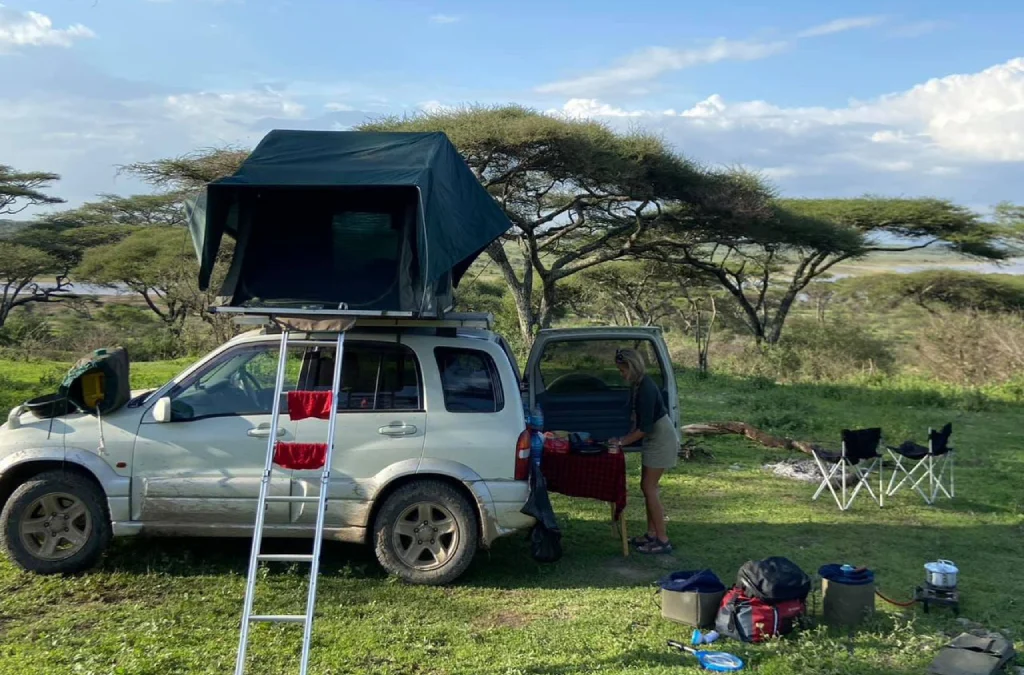
A typical camping adventure begins with an afternoon arrival at the park. After checking in and settling into your campsite, you can pitch your ground tent or set up your 4×4 vehicle with a rooftop tent. Travellers with their own camping equipment can prepare their sleeping arrangements before heading out for an afternoon game drive.
As the sun sets, return to camp, prepare dinner, and enjoy the peaceful surroundings. Hyenas may call in the distance, hippos may graze near the lakeshore, and the night sky often reveals a spectacular display of stars far removed from the lights of the city.
At dawn, birdsong provides a natural wake-up call before you set off for an early morning game drive.
For travellers planning a longer adventure, self-drive safaris in Rwanda offer the freedom to explore at your own pace, spend more time observing wildlife, and combine camping with other destinations around the country.
Things to Know Before Camping in Akagera
Before setting off, it is important to understand the facilities available at the campsites and the equipment you will need.
Firewood is provided at the campsites, but you should bring your own food, drinking water, bedding, and cooking equipment. Facilities are basic, so independent campers should arrive well prepared.
Shakani is the only campsite among the four described here with running water, flushing toilets, and solar-heated showers. Facilities at the other sites are more limited.
Muyumbu and Mutumba are fenced, while Shakani is unfenced. The unfenced setting adds to the wilderness atmosphere, but it also means you must take wildlife safety seriously. Remain close to your tent after dark, follow campsite staff instructions, and never wander around on foot at night.
If you do not own a tent or sleeping bags, camping equipment may be available for hire. A six-person canvas tent can be hired for the southern campsites, while sleeping bags and mattresses may be arranged through the Lake Mihindi restaurant. Confirm availability and prices in advance. The restaurant has previously accepted payment for these items through MTN Mobile Money only, so check the current payment arrangements before travelling.
What to Pack for a Camping Safari in Akagera
Packing the right equipment can make a significant difference to your comfort and safety, especially when you are camping independently.
- Sleeping gear: Bring a warm sleeping bag and a sleeping mat. Nights can become chilly, particularly at Mutumba.
- Food and drinking water: Carry enough food for every meal, plus extra drinking water. Pack cooking utensils if you plan to prepare your own meals, as there are no general shops inside the park.
- Lighting and warm clothing: A headlamp, torch, and fleece or jacket are useful after sunset.
- Sun and insect protection: Carry insect repellent, sunscreen, a hat, and closed shoes.
- Wildlife viewing equipment: Binoculars and a camera are valuable for observing and photographing wildlife.
- Camping equipment: Pack a tent, sleeping bags, mattresses, cooking equipment, and any other essentials not provided by your accommodation or rental company.
If you are travelling with a rental vehicle, ask about 4×4 car rental with a rooftop tent, camping mattresses, bedding, cooking utensils, a fridge, and other camping accessories before booking.
A rooftop tent is particularly convenient for travellers who want to combine accommodation and transport in one vehicle. However, always follow the park’s camping rules and use designated camping areas.
The Four Campsites in Akagera National Park
Akagera’s four camping options each offer a different experience. Choosing the right one depends on whether you prefer lakeside scenery, panoramic views, a remote wilderness atmosphere, or convenient access to basic services.
1. Shakani Campsite
Shakani Campsite sits beside Lake Shakani in the southern part of Akagera National Park. It is one of the most atmospheric places to spend a night in the park, particularly for visitors who enjoy lakeside scenery and the sounds of nature.
During the day, the lake provides opportunities to observe waterbirds, while the surrounding landscape offers a peaceful setting for relaxing after a game drive. At night, hippos can sometimes be heard grunting and splashing near the water.
Shakani is also the most comfortable of the four campsites in terms of basic facilities. It is the only one described here with running water, flushing toilets, and solar-heated showers.
The campsite is unfenced, giving it a more open wilderness atmosphere. This can be appealing to experienced campers and adventurous travellers, although everyone must follow wildlife safety instructions and avoid walking around after dark.
Shakani is a good option for visitors who want to experience camping in Akagera without giving up access to basic washing facilities.
2. Muyumbu Campsite
Muyumbu Campsite is perched on a ridge in the southern section of the park, offering panoramic views towards Lake Ihema, Lake Shakani, and the distant hills extending towards Tanzania.
Its elevated position makes it an excellent place to appreciate the changing colours of the landscape at sunrise. Imagine waking up early, preparing a cup of coffee, and watching the morning light spread across the lakes and surrounding savannah.
Muyumbu is fenced, providing a greater sense of separation from the surrounding wilderness. Tents may be available for hire through the park reception, subject to availability.
The campsite is well suited to travellers who appreciate scenic views, peaceful surroundings, and memorable sunrises during their Akagera camping safari.
3. Mutumba Campsite
Located farther north within the park, Mutumba Campsite offers a more remote camping experience among rolling grassland hills and open savannah.
Its location provides access to parts of Akagera that many visitors explore during longer game drives. The scenery is particularly attractive for travellers who enjoy wide-open views and the feeling of being far from busy tourist areas.
Temperatures can be cooler at this elevated location, especially at night, so warm clothing and suitable sleeping equipment are important.
Mutumba is fenced but does not have running water or electricity. You should therefore arrive with sufficient drinking water, food, lighting, and all the equipment you need for your stay.
Its northern location can also make it a convenient overnight stop for visitors planning to leave the park through the northern gate, subject to their itinerary and the applicable park arrangements.
4. Mihindi Campsite
Mihindi Campsite offers a more social and relaxed atmosphere. Located near Lake Mihindi, it is associated with a café and picnic area where visitors can rest, enjoy refreshments, and exchange stories about their safari experiences.
Unlike the other three campsites, the Mihindi camping option described here includes breakfast in the price. This makes it attractive to travellers who would prefer a camping experience with a little more convenience.
The nearby café can also be useful for visitors who want a break from preparing every meal themselves. Confirm the current breakfast arrangements, available facilities, and inclusions when making your reservation.
Mihindi is a suitable option for travellers who enjoy meeting other visitors and having access to a more social setting while exploring the park.
How Much Does Camping in Akagera National Park Cost?
Camping fees vary depending on the campsite selected and the age or residency category of the visitor.
The following are the indicative rates provided for the four campsites. They should be confirmed with Akagera National Park before travel, as fees and booking arrangements can change.
| Campsite | Adult per night | Child aged 6–12 per night |
|---|---|---|
| Shakani | US$25 | US$15 |
| Muyumbu | US$25 | US$15 |
| Mutumba | US$25 | US$15 |
| Mihindi | US$50 | US$30 |
Children under six were listed as camping free at Mihindi. Confirm whether the same policy applies at the other campsites when booking.
These campsite charges should not be confused with the full cost of a safari. Your overall budget may also include park entry fees, vehicle charges where applicable, vehicle rental, fuel, food, camping equipment, guided activities, and accommodation outside the park.
Rwandan and other eligible East African residents and citizens may qualify for different rates, while annual passes may be available to frequent visitors. Ask the park management for the applicable rates for your nationality and residency category.
How to Reserve a Campsite
Campsite reservations can be made through the park authorities. Contact Akagera National Park directly to confirm availability, current prices, payment procedures, and any equipment-hire arrangements.
If you are booking a self-drive safari, it is sensible to organise your campsite and vehicle arrangements together. This helps ensure that your rental vehicle is suitable for your route and that you have the equipment required for your chosen campsite.
The Best Time to Go Camping in Akagera National Park
Akagera can be visited throughout the year, but weather conditions influence road accessibility, camping comfort, and wildlife viewing.
Dry Season: June to September
The main dry season, from June to September, is generally one of the best periods for camping and wildlife viewing.
Days are often sunny, roads are generally firmer, and shorter grass can make animals easier to spot. As water becomes less widely available, wildlife may gather around lakes and other water sources, creating rewarding opportunities during game drives.
These conditions also make it easier to pitch tents and enjoy evenings outdoors. Clear skies can provide excellent opportunities for stargazing.
Because this period is popular with safari travellers, book campsites and accommodation in advance whenever possible.
Short Dry Season: December to February
The shorter dry season from December to February is another good time to consider a camping trip.
Travellers can enjoy warm weather, opportunities for wildlife viewing, and generally favourable conditions for exploring the park. It is a useful alternative for visitors who cannot travel during the middle of the year.
As conditions vary, check the weather forecast and road information before departure.
Rainy Seasons: March to May and October to November
Camping during the rainy seasons can be rewarding, particularly for travellers who enjoy lush scenery and birdwatching.
The park becomes greener, and the changing landscape can be beautiful for photography. However, heavy rain may make some roads muddy and difficult to navigate, and wet conditions can make pitching and maintaining a comfortable campsite more challenging.
If you travel during these months, bring waterproof clothing, suitable footwear, and equipment that can withstand rain.
A 4×4 vehicle with a rooftop tent can be a practical option for travellers who want a flexible camping setup, but it does not eliminate the challenges of muddy roads or poor weather. Check road conditions, respect park guidance, and avoid driving on tracks that are unsafe.
Things to Do in Akagera National Park Besides Camping
Camping provides an excellent base for exploring Akagera, but there is much more to experience beyond the campsite. The park offers a range of wildlife and nature activities that can be incorporated into a self-drive or guided safari.
Game Drives
Game drives are the highlight of most visits to Akagera. They offer opportunities to search for elephants, buffaloes, giraffes, zebras, antelopes, lions, rhinos, and, with luck, leopards.
Visitors can explore the park independently using their own suitable vehicle or hire a park guide. A guide can be especially valuable for identifying wildlife, interpreting animal behaviour, and finding animals that might otherwise be difficult to spot.
The original indicative guide rates provided for this article are approximately US$25 for a half-day and US$40 for a full day. Confirm current charges, availability, and the duration of each guided activity with the park.
Game drives can be arranged for different times of day, subject to park schedules and regulations.
For visitors who prefer to travel independently, self-drive safaris in Akagera National Park offer flexibility in planning stops and spending time at wildlife sightings. Drivers must follow park speed limits, designated routes, opening hours, and wildlife safety rules.
Boat Trips on Lake Ihema
A boat trip on Lake Ihema provides a different perspective on Akagera’s wildlife. The lake is known for its hippos, crocodiles, and diverse waterbirds.
Cruising across the water offers opportunities to photograph wildlife along the shoreline and observe bird species that may be harder to see from a vehicle. Birdwatchers may also hope to spot the elusive shoebill, although sightings are never guaranteed.
The indicative prices provided for scheduled trips are approximately US$35 per adult for a morning cruise and US$45 for a sunset cruise, with lower rates for children. Private cruises were listed at around US$180–US$360, depending on boat size.
These figures should be verified with the park before booking.
Night Drives
After sunset, Akagera’s wildlife becomes active in different ways. A guided night drive offers an opportunity to search for nocturnal animals that are rarely encountered during daytime game drives.
Possible sightings include genets, civets, bushbabies, and other nocturnal species. With luck, visitors may also encounter a lion or leopard on the move.
The indicative price supplied for a guided night drive is approximately US$50 per adult for a session lasting around two and a half hours. Check current rates, departure times, and age restrictions before making arrangements.
Night drives should be conducted only through the park’s authorised arrangements.
Birdwatching
With more than 480 recorded bird species, Akagera is an excellent destination for birdwatchers.
The park’s combination of lakes, wetlands, papyrus swamps, woodland, and savannah creates habitats for a wide variety of birds. Species of interest include African fish eagles, kingfishers, and the papyrus gonolek.
Early mornings, late afternoons, and boat trips can be particularly rewarding for birdwatching. Bring binoculars and a camera, and consider travelling with a knowledgeable guide if birds are a major focus of your visit.
Fishing at Lake Shakani
Visitors interested in fishing can ask about sport-fishing opportunities at Lake Shakani.
The indicative rate provided for this activity is approximately US$25 per day for visitors bringing their own fishing equipment. Confirm the current fee, permitted fishing methods, operating conditions, and any restrictions with park management before participating.
Visit the Park Visitor Centre
A stop at the visitor centre can help you understand Akagera’s history, wildlife, and conservation achievements.
Learning about the park’s recovery provides valuable context for the wildlife you encounter during your stay. It also offers a useful introduction to the conservation work that has helped restore Akagera as an important destination for wildlife tourism in Rwanda.
Planning an Akagera Self-Drive Camping Safari
A self-drive camping safari is an excellent choice for independent travellers who value flexibility and enjoy exploring at their own pace.
Before departing Kigali, plan your route, reserve your campsite, purchase the required park entry arrangements, and ensure that your vehicle is suitable for the roads and conditions you expect to encounter.
A reliable 4×4 can be particularly useful for exploring the park, especially during the rainy season. If you prefer to camp rather than stay in lodges, consider a vehicle equipped with a rooftop tent and the essential camping equipment.
Before confirming your rental, check whether the following items are included:
- A suitable 4×4 vehicle with appropriate tyres.
- A rooftop tent and comfortable mattress.
- Sleeping bags and bedding.
- A fridge or cooler for food and drinks.
- Cooking utensils, a stove, and fuel where applicable.
- A table and camping chairs.
- Basic recovery equipment and a spare tyre.
- Roadside assistance and clear instructions for emergencies.
The exact equipment available will depend on the rental provider, so request a written list of inclusions before paying a deposit.
Travellers combining Akagera with other destinations should also check border-crossing requirements, vehicle permissions, and insurance conditions before planning an international route.
For more inspiration, explore Rwanda self-drive safari itineraries, 4×4 car rental in Rwanda, and East Africa camping safaris to discover ways of combining wildlife viewing with other destinations in the region.
Frequently Asked Questions About Camping in Akagera National Park
1. Can you camp inside Akagera National Park?
Yes. Akagera offers designated campsites where visitors can stay overnight and experience the park’s natural surroundings. The four sites described in this guide are Shakani, Muyumbu, Mutumba, and Mihindi. Confirm availability and booking conditions before travelling.
2. How much does camping cost in Akagera National Park?
The indicative rates in this guide are US$25 per adult per night at Shakani, Muyumbu, and Mutumba, and US$50 per adult per night at Mihindi. Child rates were listed as US$15 and US$30 respectively for children aged 6–12. Confirm the current fees directly with park management.
3. Which campsite in Akagera has the best facilities?
Shakani is the only campsite among the four described here with running water, flushing toilets, and solar-heated showers. Muyumbu and Mutumba are fenced but have more limited facilities, while Mihindi offers a café and a camping option that includes breakfast according to the arrangements described in this guide.
4. Can I camp in Akagera with a rooftop tent?
Yes. A rooftop tent is a convenient option for self-drive travellers who want to combine transport and sleeping arrangements. You should use designated campsites, follow park rules, and check that your rental vehicle and camping equipment are suitable for your itinerary.
5. What is the best month to camp in Akagera?
The dry season from June to September is generally a favourable period for camping and wildlife viewing. December to February can also be a good option. Camping is possible during the rainy seasons, but muddy roads and wet conditions may make travel more challenging.
6. Can I hire camping equipment in Akagera?
Some camping equipment may be available for hire, including a six-person canvas tent for the southern sites and sleeping bags and mattresses through the Lake Mihindi restaurant. Availability, prices, and payment arrangements should be confirmed before arrival.
7. Is camping in Akagera safe?
Camping is possible when visitors follow park regulations and wildlife safety instructions. Some campsites are unfenced, and wild animals may move through the surrounding area. Stay close to your tent after dark, never walk around at night, and follow all guidance from park staff.
8. Can I visit Akagera National Park on a self-drive safari?
Yes. Visitors can explore Akagera independently in a suitable vehicle, provided they comply with park entry requirements, driving rules, and operating hours. A reliable 4×4 is a practical choice for many safari itineraries, particularly when camping or travelling in wet conditions.
9. What activities can I combine with camping in Akagera?
You can combine camping with daytime game drives, guided night drives, boat trips on Lake Ihema, birdwatching, fishing at Lake Shakani, and a visit to the park visitor centre. Activity availability, schedules, and fees should be checked before your visit.
10. Do I need to book an Akagera campsite in advance?
Booking ahead is recommended, particularly during busy travel periods. Contact the park authorities to confirm availability, current campsite fees, equipment hire, and payment arrangements before beginning your journey.
Ready to Camp Under the Akagera Stars?
Akagera National Park is proof that Rwanda offers far more than gorilla trekking and chimpanzee encounters. Its remarkable conservation recovery, varied landscapes, and rich wildlife make it one of the country’s most rewarding destinations for a savannah adventure.
Camping allows you to experience this wilderness in a personal and memorable way. From watching sunrise over Lake Ihema at Muyumbu to listening to hippos near Lake Shakani, every campsite offers a different perspective on the beauty of Akagera.
Whether you are travelling as a couple, with family, or with a group of friends, you can make your trip even more flexible by choosing a self-drive safari and bringing your own camping setup.
Contact our team to discuss your preferred vehicle, camping equipment, and itinerary. With the right preparation, you can set up your temporary home in the savannah and enjoy the wildlife, open skies, and unforgettable nights of Akagera National Park.