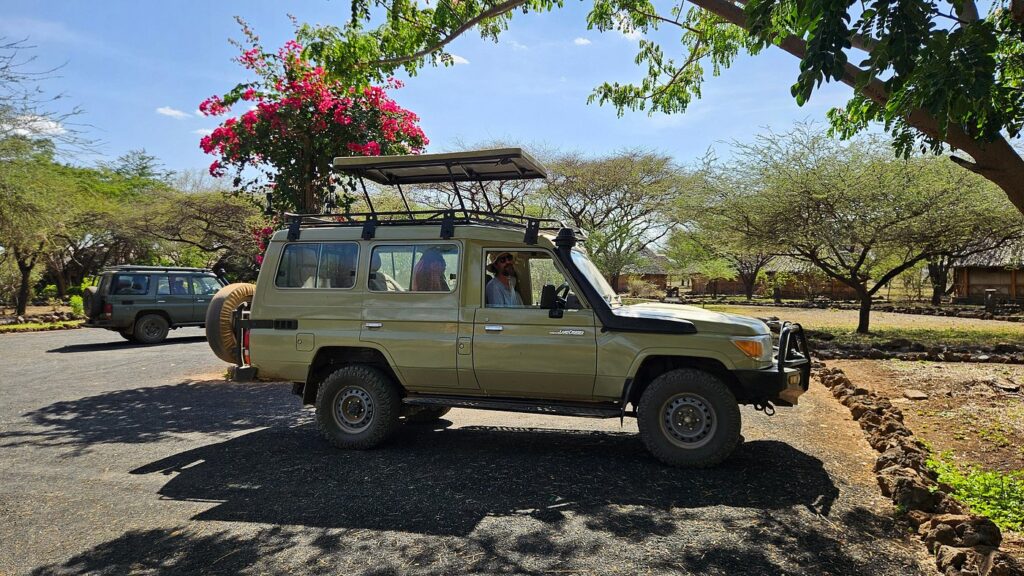
Crossing Borders with a Rental Car in East Africa: What Every Traveller Should Know
East Africa is one of Africa’s most rewarding regions for an overland adventure. A well-planned road trip can take you from the savannahs of Kenya to the Serengeti in Tanzania, the forests of Uganda, or the volcanic landscapes of Rwanda—all within one extended journey.
For independent travellers, cross-border car rental in East Africa offers exceptional freedom. You can create your own itinerary, spend more time in places you enjoy, and travel beyond the standard routes offered by organised tours.
However, taking a rental car across an international border is not as simple as driving up to a border post and continuing into the next country. Vehicle authorization, insurance, customs procedures, immigration requirements, road regulations and national-park rules all need to be considered before departure.
This guide explains what travellers should know when planning a self-drive road trip across Kenya, Tanzania, Uganda and Rwanda, including the documents, insurance, vehicle requirements and practical considerations involved.
Understanding Cross-Border Car Rental in East Africa
Cross-border travel by rental vehicle is possible in several parts of East Africa, but permission from the rental company is essential.
A vehicle rented in one country remains legally registered and insured under that country’s requirements. The rental company therefore needs to confirm that its insurance, vehicle documentation and operating permissions remain valid when the vehicle enters another country.
Cross-border policies vary between rental companies. Some allow vehicles to travel between Kenya, Uganda, Tanzania and Rwanda, while others restrict particular countries, routes or vehicle categories.
Some companies may also permit travel to destinations such as Burundi or Zambia under special arrangements, while other destinations may be excluded because of insurance, security, licensing or operational considerations.
For this reason, never assume that a vehicle can cross a border simply because the countries share a land boundary.
Always obtain written confirmation from your rental company before travelling.
Get Cross-Border Authorization Before You Travel
The first step in any international self-drive journey is to speak with your rental company.
When requesting a quotation, provide your complete proposed itinerary. Include:
- Your pick-up country and location
- Your planned travel dates
- Every country you intend to visit
- Your intended border crossings
- The approximate route
- Your final vehicle drop-off location
- Whether you are returning the vehicle to its original location
- Whether you require a one-way international rental
The rental company can then determine whether the vehicle is permitted to travel on your proposed route and what additional documentation or charges may apply.
A reputable East African car-rental company should explain the requirements before you make the journey rather than leaving you to discover them at the border.
Why early authorization matters
Cross-border approval may require additional preparation, including:
- Insurance documentation
- Vehicle authorization letters
- Customs documentation
- Copies of registration documents
- Temporary import arrangements
- Cross-border fees
- One-way vehicle recovery arrangements
- Confirmation of the permitted countries and routes
For complicated itineraries involving several countries, it is advisable to make your rental request well in advance.
The COMESA Yellow Card and Cross-Border Motor Insurance
One of the most important considerations when driving a rental vehicle internationally in East Africa is third-party motor insurance.
The COMESA Yellow Card is a regional motor-vehicle insurance system designed to facilitate cross-border travel by providing recognized third-party liability insurance across participating countries.
However, travellers should not assume that a standard rental insurance policy automatically provides all the cover required for every country on their itinerary.
Before departure, ask your rental company:
- Is a Yellow Card provided?
- Which countries does the insurance cover?
- Is the Yellow Card included in the rental price?
- Are additional insurance charges payable?
- What is the vehicle’s insurance excess?
- Does the policy provide comprehensive cover or only third-party liability?
- Are national parks and off-road driving covered under the rental agreement?
Insurance arrangements can vary significantly between rental companies and countries, so obtain confirmation in writing.
Border Procedures, Fees and Temporary Vehicle Entry
Crossing an East African border involves both immigration procedures for travellers and customs procedures for the vehicle.
At the border, you may need to present:
- Passport
- Valid visa or entry authorization, where applicable
- Driving licence
- International Driving Permit, where required or recommended
- Vehicle registration documents
- Rental agreement
- Cross-border authorization letter
- Insurance documentation
- COMESA Yellow Card, where applicable
- Temporary vehicle-import documentation
You may also encounter additional charges associated with the vehicle’s entry into another country.
These can include:
- Cross-border administration fees
- Temporary import or customs charges
- Road-user or vehicle-entry fees
- Insurance charges
- One-way vehicle fees
- Applicable taxes or levies
The exact requirements depend on the countries involved and can change over time.
Ask your rental company for a current breakdown of all expected border costs before departure.
One-Way Cross-Border Rentals
One of the most attractive options for a multi-country East African road trip is a one-way rental.
For example, a traveller could potentially collect a vehicle in Nairobi, travel through Kenya and Uganda, and finish in Kigali, subject to the rental company’s approval.
Another itinerary might begin in Arusha, continue through northern Tanzania and Kenya, and finish in Nairobi.
However, international one-way rentals are considerably more complicated than returning a vehicle to the original location.
The rental company must arrange for the vehicle to be legally returned to its country of registration or transferred through an approved cross-border operation.
Consequently, international one-way fees can be significant.
If your itinerary involves a different drop-off country, mention this at the beginning of the booking process rather than requesting it after the rental has already been confirmed.
Documents You Should Carry
Before leaving the rental office, make sure you have all necessary documents.
Personal documents
Carry:
- A valid passport
- Required visas or travel authorizations
- A valid driving licence
- International Driving Permit where applicable
- Copies of important travel documents
Vehicle documents
You should normally have access to:
- Vehicle registration documents
- Rental agreement
- Cross-border authorization letter
- Insurance certificate
- COMESA Yellow Card where applicable
- Temporary import/customs documentation where required
Keep both physical and electronic copies of important documents where practical.
At international borders, relying exclusively on a phone can be risky because internet coverage and battery charging may not always be available.
National Park and Vehicle Restrictions
Cross-border permission from a rental company does not automatically mean that the vehicle can enter every national park or conservation area in the region.
This is particularly important when planning a Kenya–Tanzania self-drive itinerary.
Certain parks and protected areas can have specific rules concerning foreign-registered vehicles, park access, permits, insurance, or vehicle registration.
Therefore, travellers should confirm three separate things:
- Can the rental vehicle legally cross the international border?
- Can the vehicle legally operate in the destination country?
- Can that particular vehicle enter the national parks and protected areas on your itinerary?
These are not necessarily the same question.
If your journey includes the Serengeti, Ngorongoro Conservation Area, Maasai Mara, Amboseli, Lake Nakuru, Bwindi, Volcanoes National Park or other protected areas, ask your rental company and the relevant park authority about current vehicle-entry requirements.
Do not assume that a vehicle permitted to cross the border will automatically qualify for every park.
Choosing the Right Rental Vehicle for an East African Road Trip
The vehicle you choose can make a significant difference to your experience.
If your itinerary is limited to major cities and paved highways, a standard SUV may be sufficient.
For a safari involving national parks, remote campsites and rough roads, however, a reliable 4×4 rental vehicle is generally a much better option.
Popular choices for East African self-drive include:
- Toyota Land Cruiser Prado
- Toyota Land Cruiser 76 Series
- Toyota Land Cruiser 78 Series
- Toyota Land Cruiser 79 Series
- Toyota Land Cruiser V8
- Toyota Hilux
- Nissan Patrol
The ideal vehicle depends on your route, number of passengers, luggage, camping requirements and road conditions.
What to check before leaving
Inspect the vehicle carefully with the rental representative.
Check:
- Tyres and spare tyre
- Brakes
- Lights
- Windshield and windows
- Engine condition
- Suspension
- Recovery equipment
- Jack and wheel-changing tools
- Fire extinguisher
- First-aid kit
- Warning triangle
- Seat belts
- Communication equipment where provided
Take photographs or video of the vehicle’s condition before departure, particularly any existing scratches, dents or damage.
Rooftop Tent and Camping Equipment
Travellers planning a self-drive safari often choose a 4×4 with a rooftop tent.
This can be particularly useful for longer journeys where accommodation options are limited or where travellers want greater flexibility.
Depending on the rental company, camping packages may include:
- Rooftop tent
- Mattress
- Sleeping bags
- Camping chairs
- Camping table
- Cooking equipment
- Plates and utensils
- Gas cooker
- Cooler or fridge
- Auxiliary battery system
Confirm exactly what is included before booking, as camping equipment varies considerably between providers.
Driving Conditions Across East Africa
Road conditions can change dramatically between countries and even between different sections of the same journey.
Major highways between cities are generally easier to navigate, while roads leading to remote communities, national parks and campsites may be:
- Gravel
- Corrugated
- Rocky
- Muddy during rainy periods
- Narrow
- Dusty
- Poorly marked
A 4×4 gives you considerably more capability on difficult roads, but it does not eliminate the need for careful driving.
Driving sides differ
One important difference travellers need to remember is that countries in the region do not all drive on the same side of the road.
Kenya, Tanzania and Uganda drive on the left.
Rwanda and Burundi drive on the right.
This change can be particularly noticeable when crossing between Uganda and Rwanda.
Take extra care when approaching intersections, roundabouts, overtaking situations and busy urban areas.
Speed Limits and Road Safety
Speed limits vary between countries and road types, so always follow the signs in the country you are travelling through.
Drivers should also watch for:
- Pedestrians
- Cyclists
- Motorcycles
- Livestock
- Speed bumps
- Slow-moving trucks
- Unexpected potholes
- Wildlife near parks
- Poorly marked road hazards
Speed bumps can sometimes be difficult to see, especially at night.
For this reason, travellers should avoid driving after dark whenever possible, particularly on unfamiliar rural roads.
A good rule for a self-drive safari is to finish the day’s driving before nightfall.
Fuel Planning for a Cross-Border Road Trip
Fuel stations are common in major towns and along busy highways, but they become less frequent in remote areas.
Never wait until your fuel tank is nearly empty before looking for a station.
Instead:
- Fill up in major towns
- Refuel before entering remote areas
- Keep track of your fuel consumption
- Carry sufficient drinking water
- Know the approximate distance to your next reliable fuel station
- Check whether your rental vehicle has one or two fuel tanks
For long safari routes, a vehicle with good fuel capacity can be a major advantage.
Navigation and Internet Connectivity
Mobile internet coverage is generally good in urban areas but can become unreliable in remote parts of East Africa.
Before setting off, download offline maps for your entire route.
Useful preparations include:
- Offline Google Maps
- Downloaded route information
- GPS navigation
- Paper maps as a backup
- Important telephone numbers
- Emergency contacts
- Rental company contact information
Do not rely entirely on mobile internet when driving through remote national parks or border regions.
Crossing Borders with Children or Additional Drivers
If more than one person will drive the rental vehicle, make sure every driver is officially listed on the rental agreement.
Each additional driver may need to provide:
- Passport
- Driving licence
- International Driving Permit where applicable
- Personal details for the rental contract
Never allow an unregistered driver to take control of the rental vehicle.
If travelling with children, also confirm the relevant entry, immigration and vehicle-safety requirements before departure.
Kenya–Tanzania Cross-Border Car Rental
A Kenya–Tanzania road trip is one of the most attractive cross-border journeys in East Africa, particularly for travellers combining the Maasai Mara with the Serengeti.
However, this route requires particularly careful planning because vehicle-entry rules, insurance requirements and national-park regulations can differ between the two countries.
Travellers should confirm:
- Whether the rental vehicle is authorized to cross
- Which border crossing is permitted
- Whether the vehicle can enter the planned Tanzanian parks
- Required insurance documentation
- Temporary vehicle-entry requirements
- Cross-border fees
- Whether a one-way drop-off is possible
Do not assume that every Kenyan rental vehicle can enter Tanzania for a safari.
Uganda–Rwanda Cross-Border Car Rental
Uganda and Rwanda offer an excellent combination for travellers interested in wildlife, primates, gorilla trekking and scenic landscapes.
A road trip can potentially combine destinations such as Kampala, Queen Elizabeth National Park, Bwindi, Kigali and Volcanoes National Park.
However, the change from left-hand traffic in Uganda to right-hand traffic in Rwanda requires additional attention from self-drive travellers.
Before departure, confirm the vehicle’s cross-border authorization and the documentation required for both countries.
Kenya–Uganda Cross-Border Car Rental
Kenya and Uganda are connected by established road corridors, making a combined safari and cultural itinerary possible.
Travellers may combine Kenya’s wildlife destinations with Uganda’s national parks and primate experiences.
As with every cross-border rental, the vehicle must have the appropriate authorization and insurance for both countries.
Tanzania–Rwanda Cross-Border Travel
A Tanzania–Rwanda road trip can be an interesting option for travellers combining northern Tanzania with Rwanda.
Because the journey crosses different road systems and border procedures, advance planning is especially important.
Your rental company should confirm whether its vehicle can make the journey and whether your proposed route is permitted under its insurance and operating conditions.
What About Burundi, Zambia and Other Countries?
Some East African rental companies operate beyond the four main markets of Kenya, Tanzania, Uganda and Rwanda.
Depending on the provider, cross-border travel may be possible into countries such as Burundi or further south toward Zambia, Zimbabwe or South Africa.
However, these journeys should be treated as special cross-border arrangements, not standard rental extensions.
The further the vehicle travels from its country of registration, the more important it becomes to confirm:
- Insurance validity
- Customs requirements
- Vehicle authorization
- Border procedures
- Road conditions
- Security considerations
- Recovery arrangements
- Permitted drop-off locations
Always obtain written confirmation before committing to the itinerary.
Common Mistakes to Avoid
Assuming border crossing is automatically allowed
It isn’t. Obtain written authorization before departure.
Booking the vehicle first and checking the route later
Your preferred vehicle may not be approved for your intended countries or parks.
Assuming insurance works everywhere
Ask exactly where your insurance is valid and what it covers.
Forgetting about one-way fees
International vehicle recovery can be expensive.
Leaving border preparations until the last minute
Cross-border documentation can take time to arrange.
Driving too late
Remote roads can be difficult to navigate after dark, with limited lighting and unpredictable hazards.
Failing to refuel
Fuel stations can be widely spaced in remote regions.
Assuming park access is automatic
National parks may have additional vehicle-registration and entry requirements.
Cross-Border Self-Drive Checklist
Before beginning your East African road trip, confirm the following:
Rental
- Cross-border authorization obtained
- All countries approved
- Border crossings confirmed
- One-way drop-off confirmed if applicable
- Additional driver registered
Insurance
- Rental insurance confirmed
- COMESA Yellow Card confirmed where applicable
- Insurance coverage checked for every country
- Excess understood
Documents
- Passport
- Visa/entry authorization where applicable
- Driving licence
- International Driving Permit where required
- Vehicle registration
- Rental agreement
- Authorization letter
- Insurance documents
- Temporary vehicle-import documents where applicable
Vehicle
- Spare tyre
- Recovery equipment
- Jack and tools
- First-aid kit
- Fire extinguisher
- Warning triangle
- Good tyres
- Full fuel tank
Journey
- Offline maps downloaded
- Fuel stops planned
- Border crossing times checked
- Accommodation/campsites planned
- Emergency contacts saved
- Rental company’s 24-hour contact available
Frequently Asked Questions About Cross-Border Car Rental in East Africa
Can I take a rental car from Kenya to Tanzania?
Potentially, yes, but only if the rental company specifically authorizes the vehicle for cross-border travel and the necessary insurance and documentation are arranged.
Can I drive a rental car from Tanzania to Kenya?
Some rental companies permit this, but restrictions can apply depending on the vehicle, route, insurance and intended destinations. Always obtain approval before booking.
Can I drive from Uganda to Rwanda in a rental car?
Cross-border travel between Uganda and Rwanda can be possible with an appropriately authorized rental vehicle. Confirm the required documentation, insurance and temporary vehicle-entry procedures with your rental company.
Do I need a COMESA Yellow Card?
The Yellow Card is an important regional third-party motor-insurance mechanism, but requirements and availability depend on the countries involved and the rental arrangement. Ask your rental company whether it is provided and what additional insurance is required.
Can I cross the border and return the car in another country?
Some specialist rental companies offer international one-way rentals. These usually require advance planning and may involve substantial one-way or vehicle-recovery charges.
Can I use a rental car in national parks after crossing a border?
Not necessarily. International authorization and national-park vehicle eligibility are separate issues. Confirm park-specific requirements before travelling.
Is a 4×4 necessary for an East African road trip?
Not for every itinerary. A standard vehicle can be suitable for major highways and cities, but a capable 4×4 is strongly recommended for many safari routes, remote areas and rough roads.
Can I drive across East Africa at night?
It is possible in some areas, but it is generally advisable to avoid long-distance night driving, particularly on unfamiliar rural roads and in areas with limited lighting.
Plan Your East Africa Cross-Border Self-Drive Adventure
A cross-border road trip through East Africa can be an extraordinary experience. Imagine driving from the wildlife-rich plains of Kenya into Tanzania’s Serengeti, continuing towards Uganda’s lush forests, or combining Rwanda’s volcanic landscapes with a wider East African adventure.
The key is preparation.
Choose the right vehicle, obtain written cross-border authorization, confirm insurance and Yellow Card arrangements, understand border procedures, check national-park requirements and plan your fuel, navigation and accommodation before setting off.
At Self drive Rwanda, we help travellers plan self-drive journeys across East Africa with suitable 4×4 rental vehicles and practical route support.
Whether you are planning a Kenya–Tanzania safari, Uganda–Rwanda road trip, Tanzania–Kenya self-drive adventure, or a longer East African overland journey, we can help you select the appropriate vehicle and understand the requirements for your route.
Contact Self drive Rwanda to discuss your East Africa cross-border car rental and safari itinerary.
Let us help you turn your multi-country East African road trip into a safe, flexible and unforgettable adventure.